-
 Whetstone
 -
 Whetstone
 -
 Whetstone
 -
 Whetstone
 -
 Whetstone
 -
 Whetstone
Whetstone
Whetstone
Couldn't load pickup availability
Morihei Hi series · Original synthetic whetstone · Asakusabashi, Tokyo
The whetstone behind the blade
Japanese blades are renowned worldwide for their exceptional sharpness — and behind this excellence lies the whetstone. A knife carefully honed on a whetstone slices through ingredients without crushing their fibers, leaving clean, glossy cuts that enhance both presentation and flavor.
"We created this with the hope of making the art of sharpening more approachable for everyone, and spreading the rich culture of whetstone craftsmanship even further." These are the words of Akimitsu Oguro, the fourth-generation owner of Morihei — a knife and whetstone specialist based in Asakusabashi, Tokyo, trusted by professionals since 1933.

Akimitsu Oguro, fourth-generation owner of Morihei.

Sharpening Station — a carefully curated selection of premium whetstones.
The creation of an original whetstone
Whetstones fall into two types: natural stones mined from mountains, and synthetic stones crafted by hand. Natural whetstones are prized for their ability to deliver an exceptionally sharp edge — qualities essential for Japanese swords and fine blades. However, as mines have closed, natural whetstones have become increasingly rare. Today, over 90% of whetstones in circulation are synthetic.
"If this trend continues, whetstones themselves might disappear one day." That thought led Morihei to a clear goal: to create a synthetic whetstone that closely resembles the qualities of a natural one. After approximately five years of development, the result was the Morihei Hi series.
Focusing on the contact, feel, and sound when sharpening, the stone was crafted to achieve an ideal balance of sharpening power and ease of use. It delivers a smooth sharpening experience — evoking the gentle texture of natural whetstone particles, with a refined and satisfying feel. Unlike most synthetic whetstones, no soaking is required; a splash of water on the surface is all it takes to begin.
How to choose the right grit
The Hi series offers six grits, from coarse to ultra-fine. The traditional sharpening process moves from coarse (to reshape the edge), to medium (to sharpen), to finishing (to polish). For home use, the #1000 medium whetstone is the recommended starting point — versatile enough to maintain a knife's edge on its own, and sufficient for most everyday cooking needs.

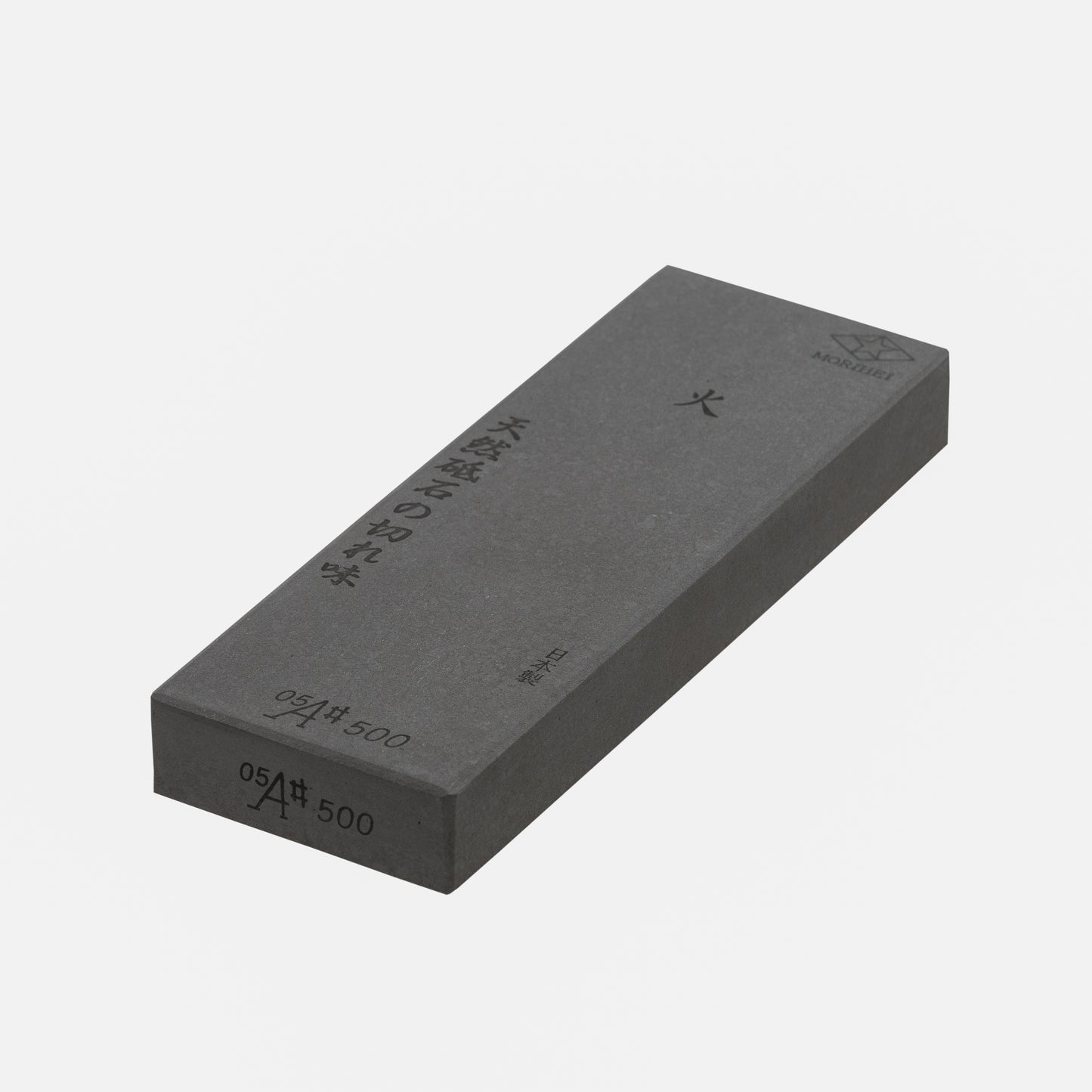
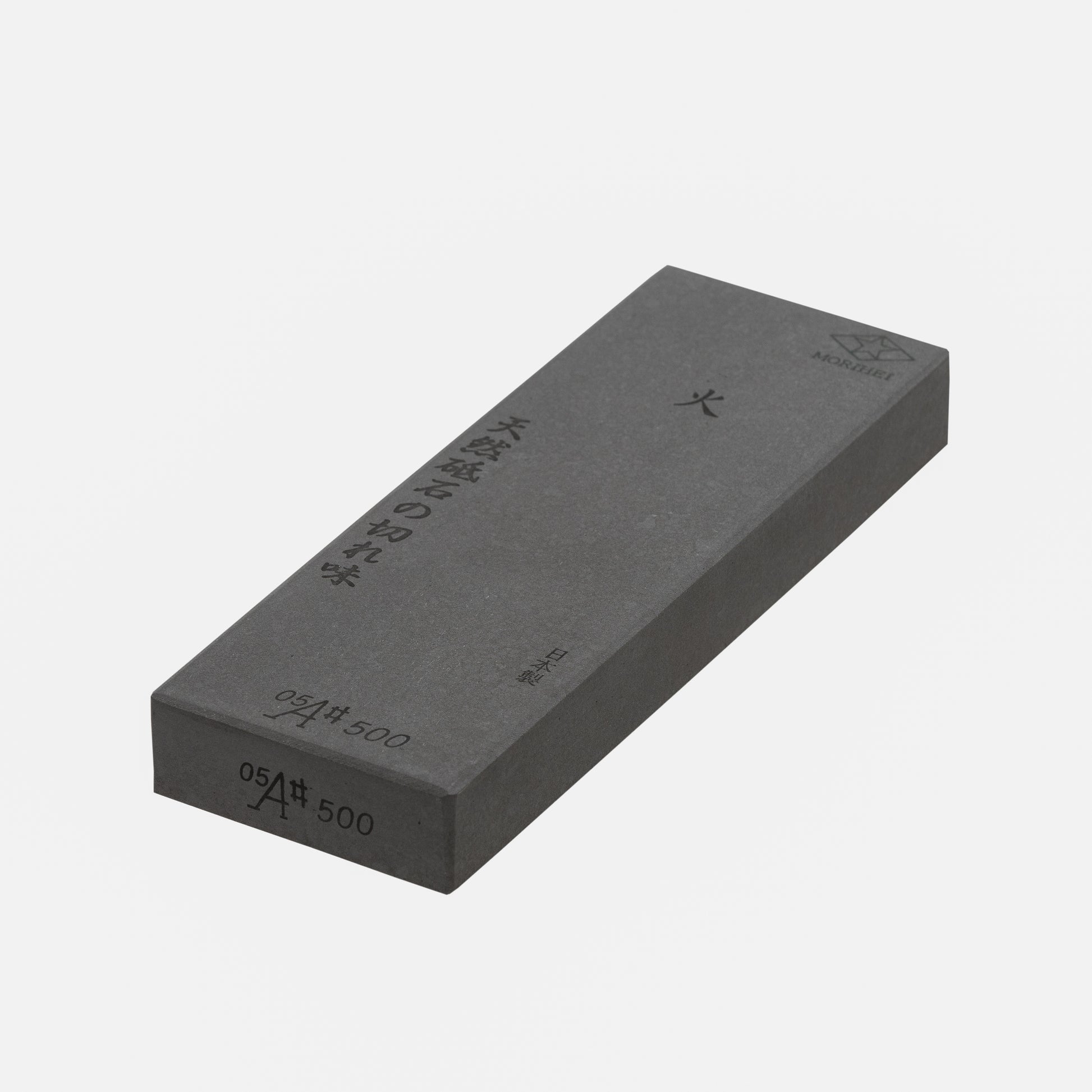
#500 — Coarse
Shapes the blade's edge and corrects imperfections. Ideal for repairing minor chips and restoring overall geometry.
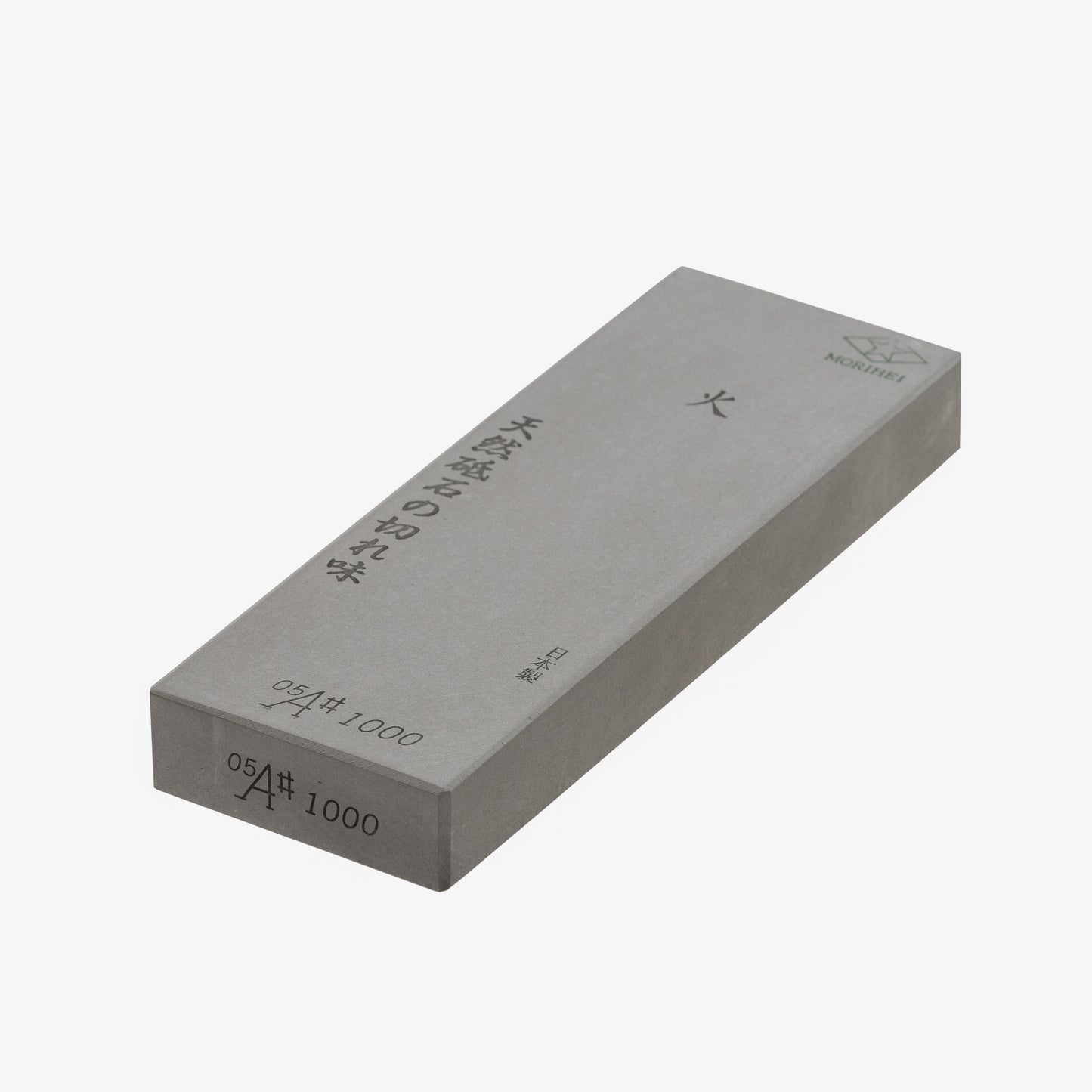
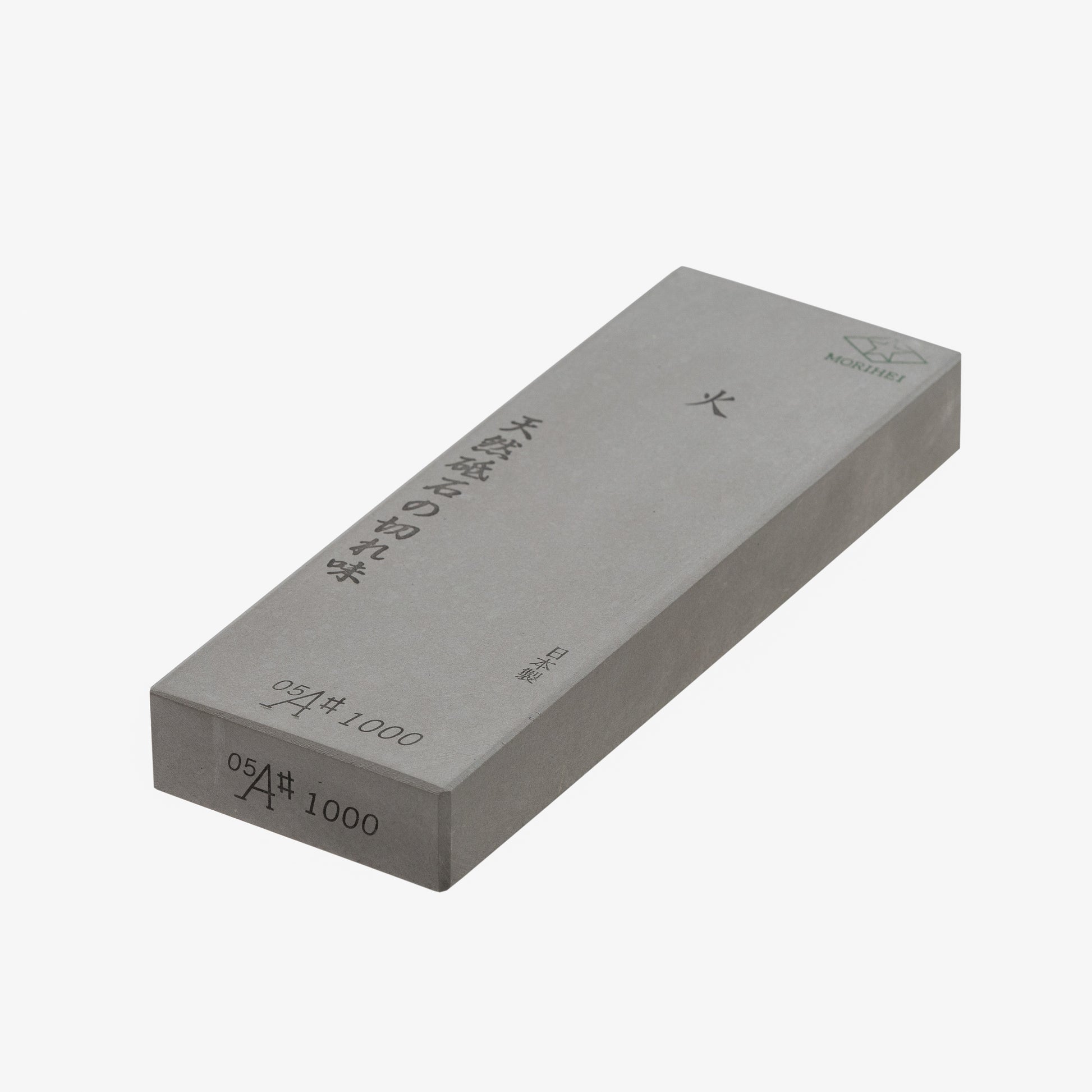
#1000 — Medium
Use when your knife begins to lose its edge. Regular use — roughly once a month — maintains optimal cutting performance.
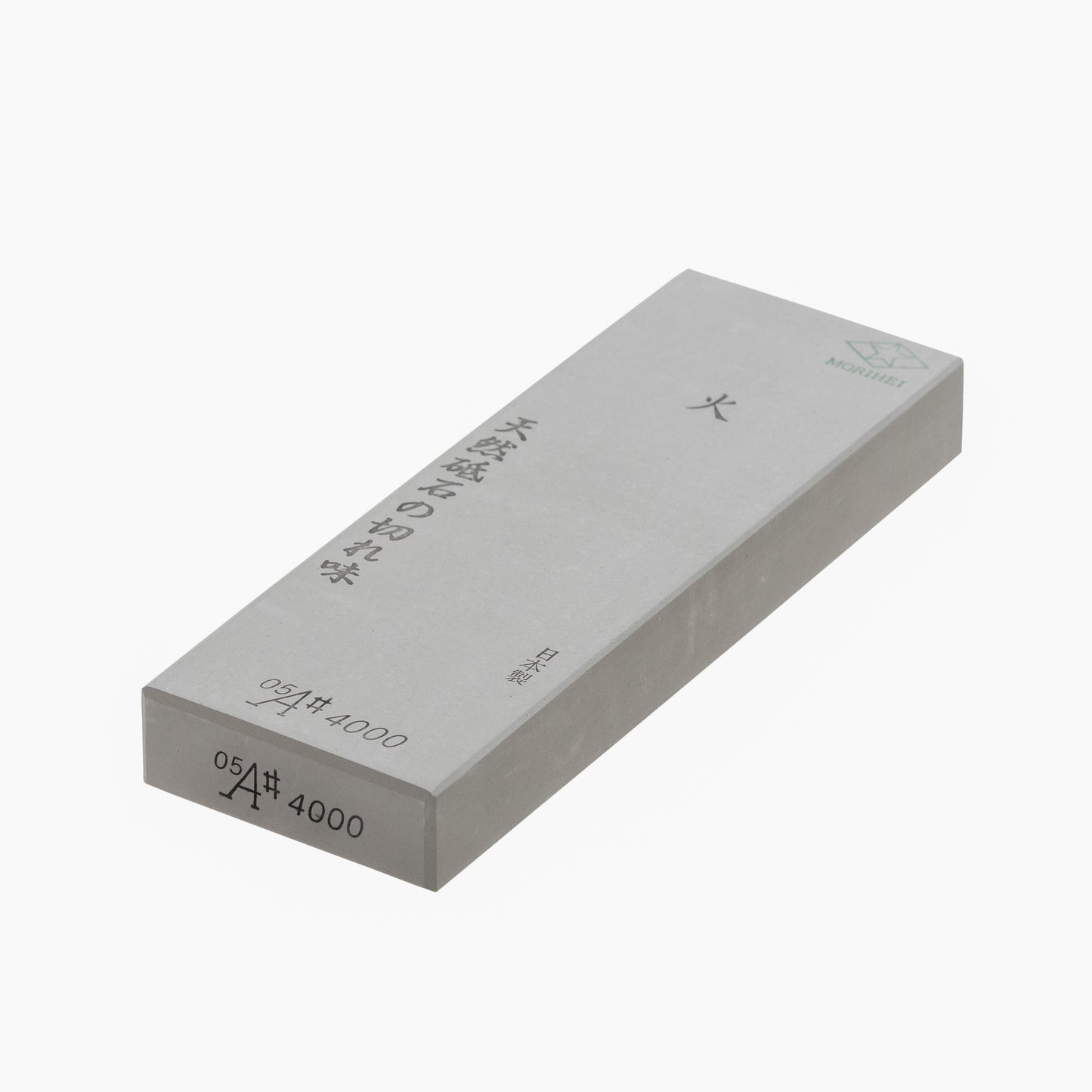
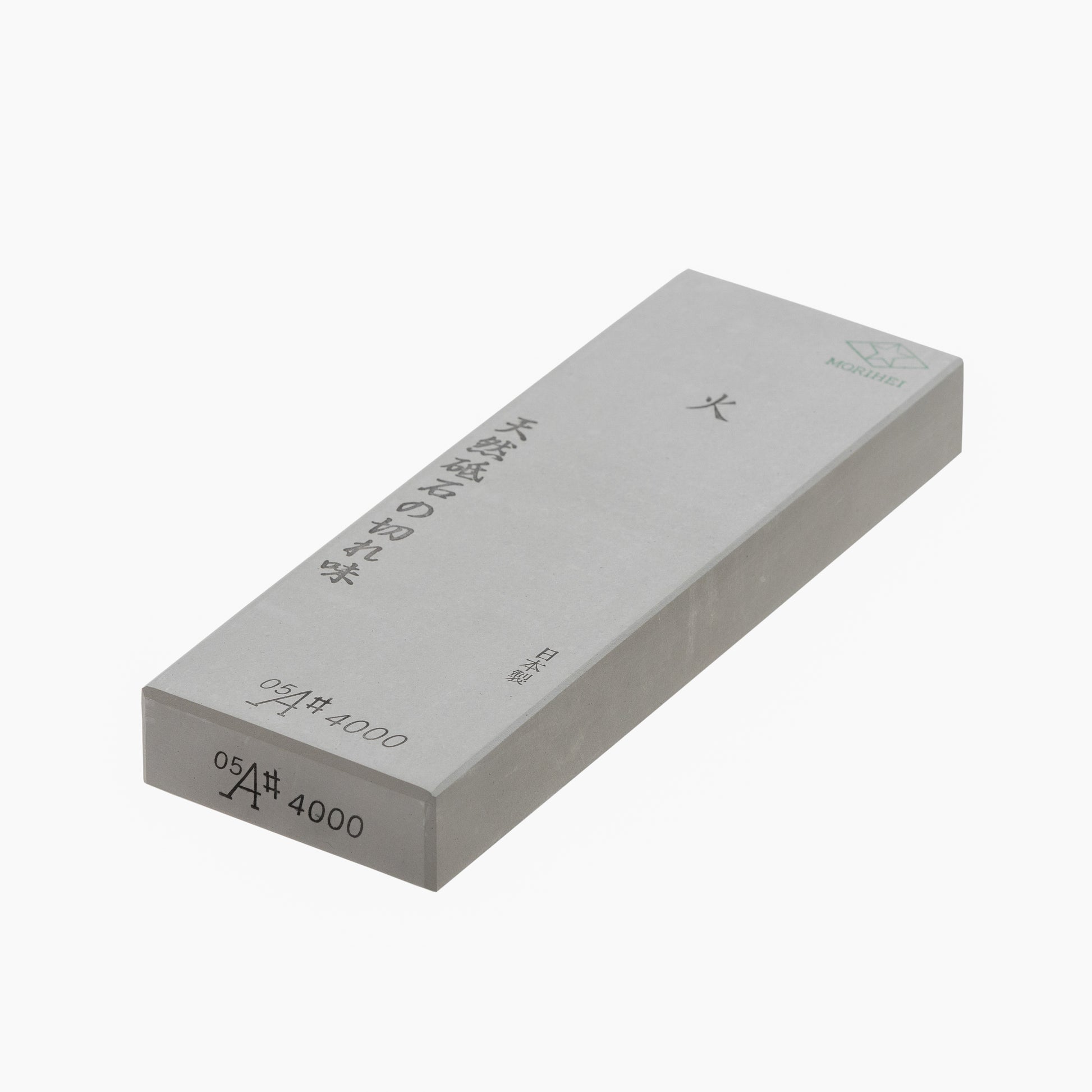
#4000 — Medium-finishing
Refines the edge to a smoother, more polished finish. Use after the #1000 for best results.
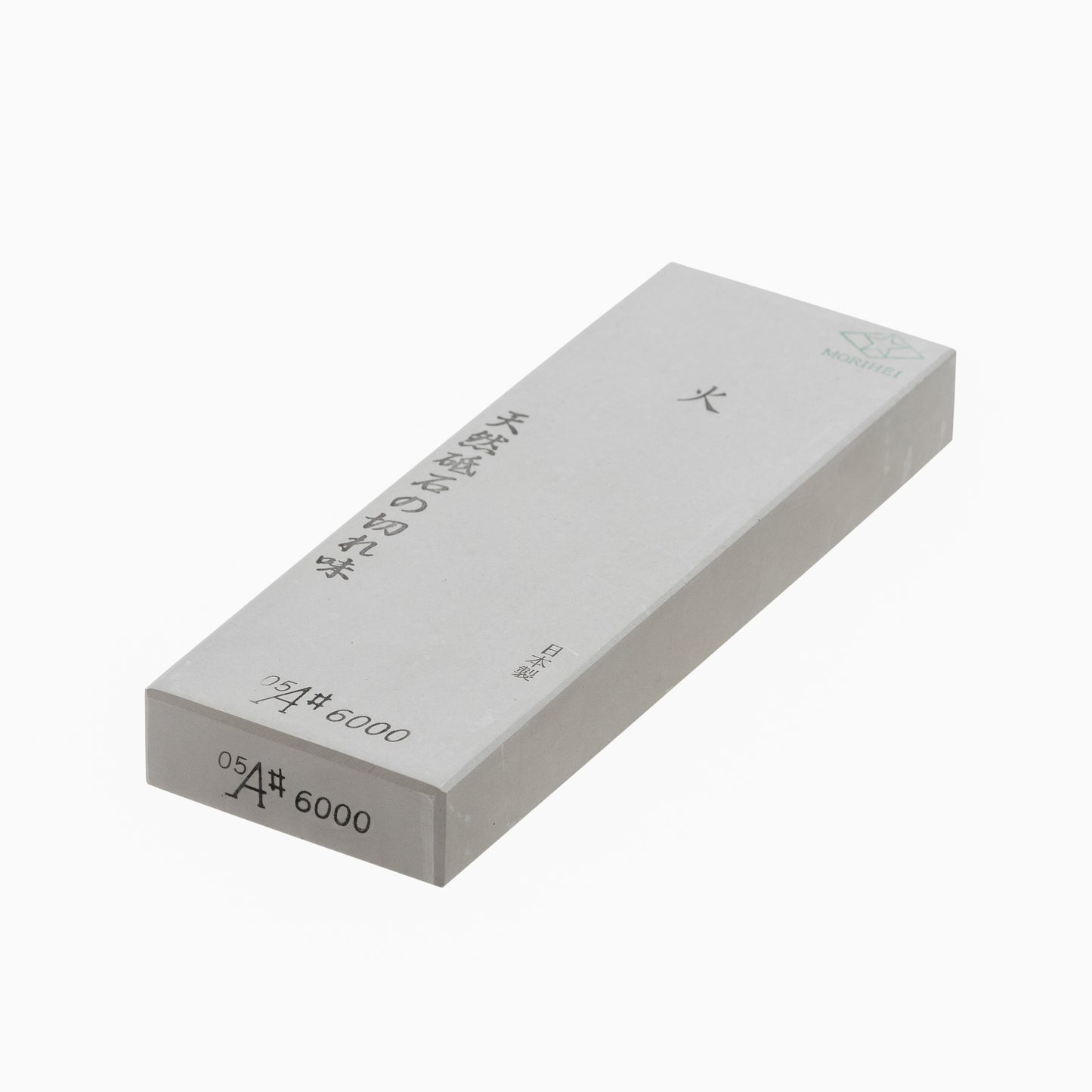
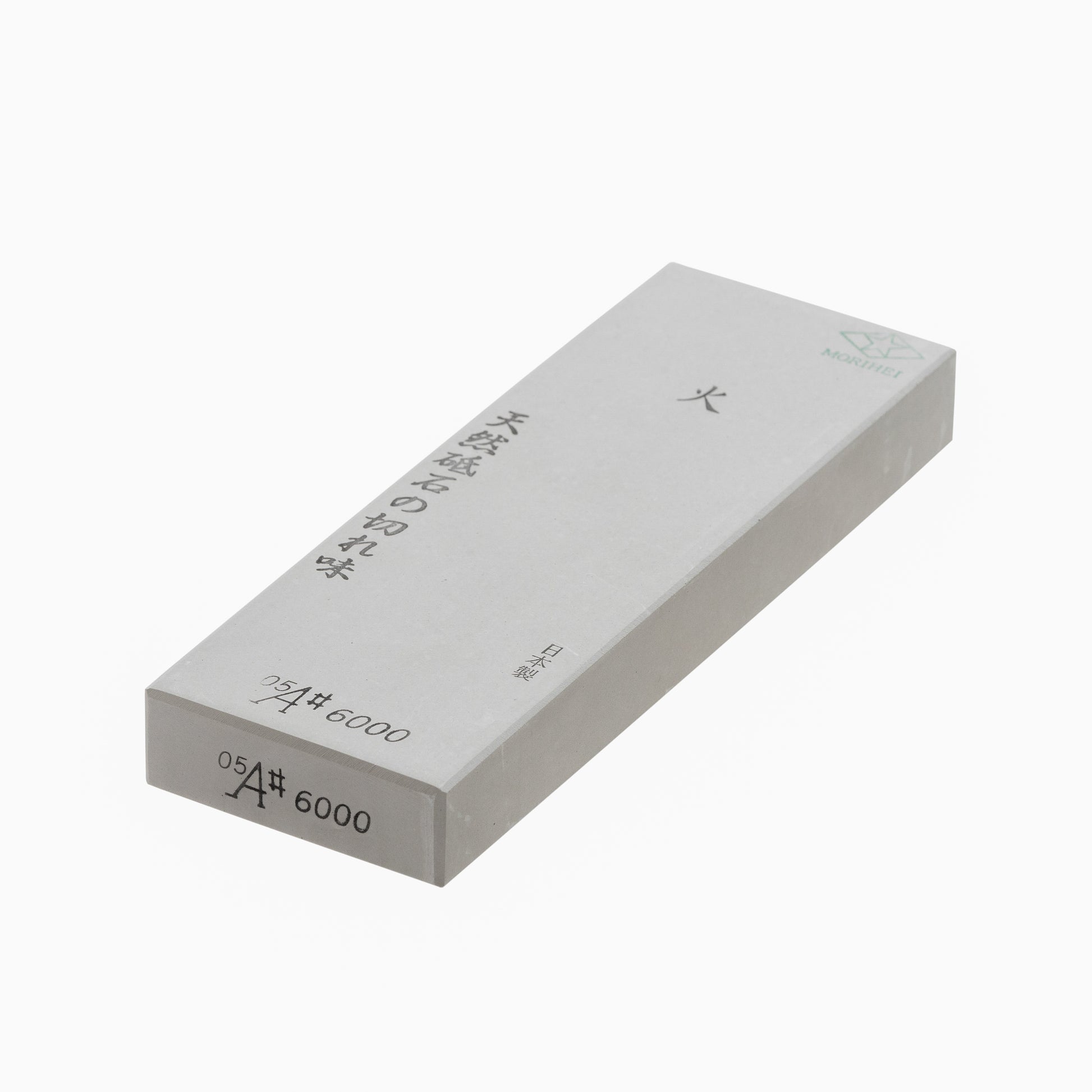
#6000 — Finishing
For those seeking exceptional sharpness and an edge that holds longer. Use after the #4000.
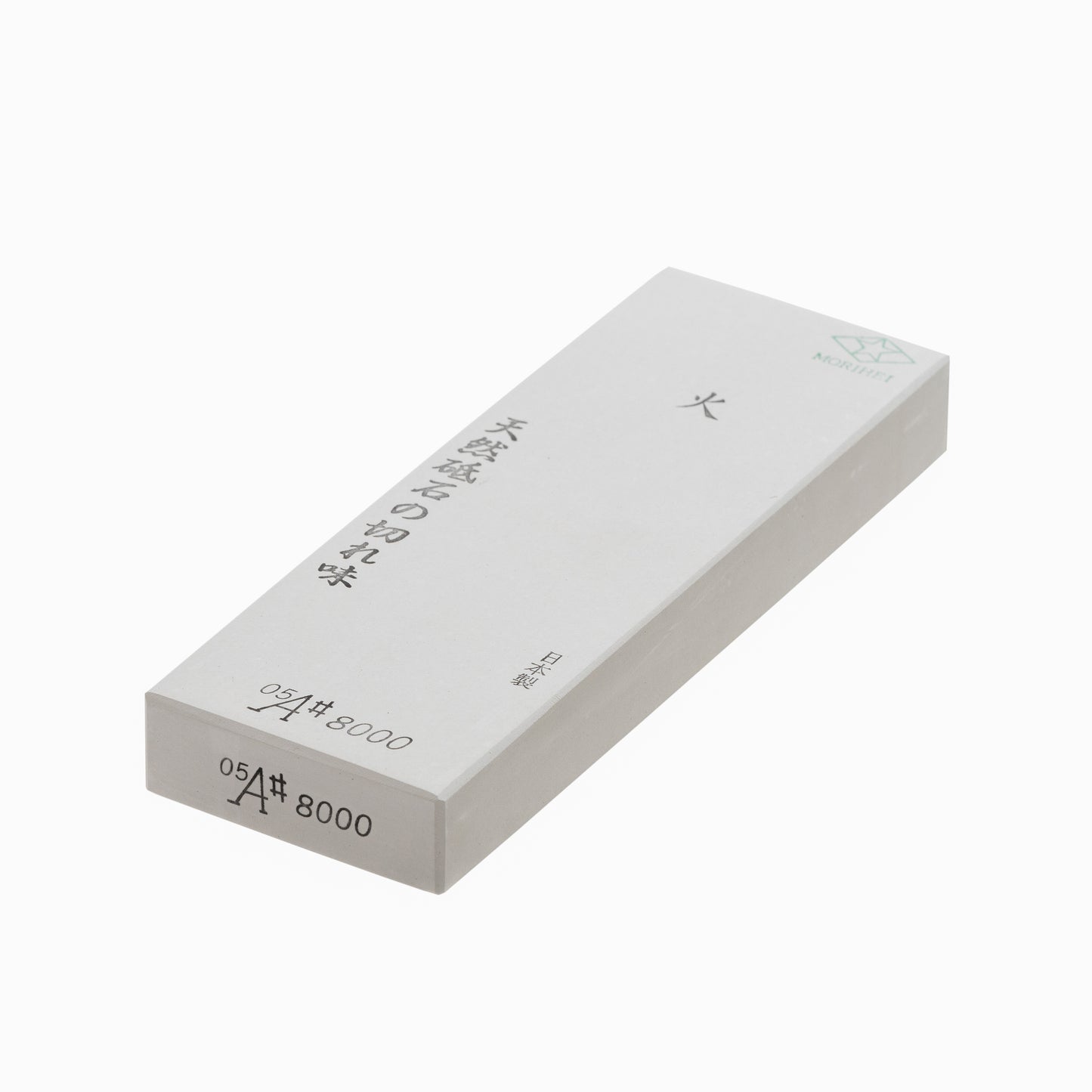
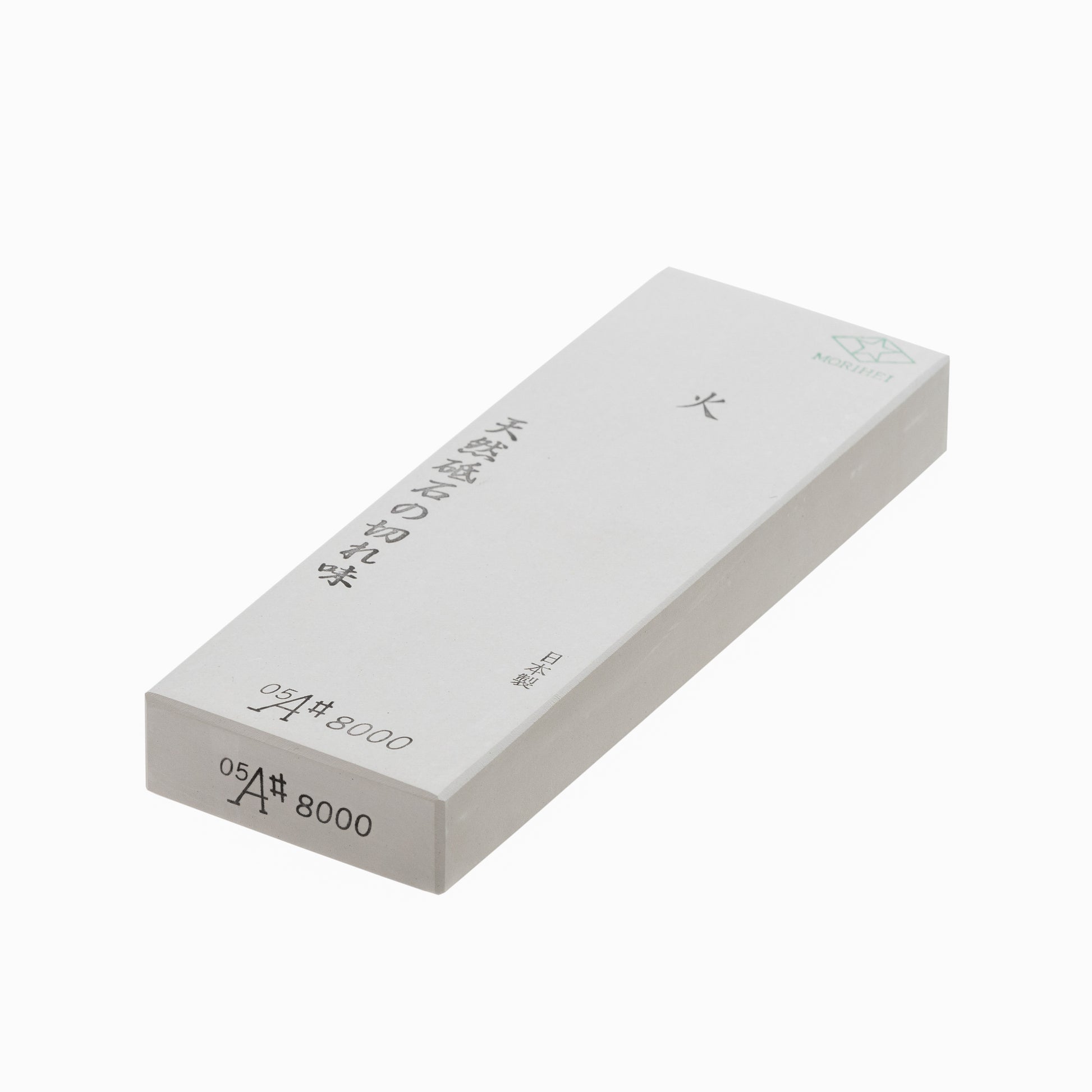
#8000 — Finishing
Refines the edge to an incredibly smooth finish, resulting in glossy, clean cuts. Sharpness lasts exceptionally long. Use after the #6000.
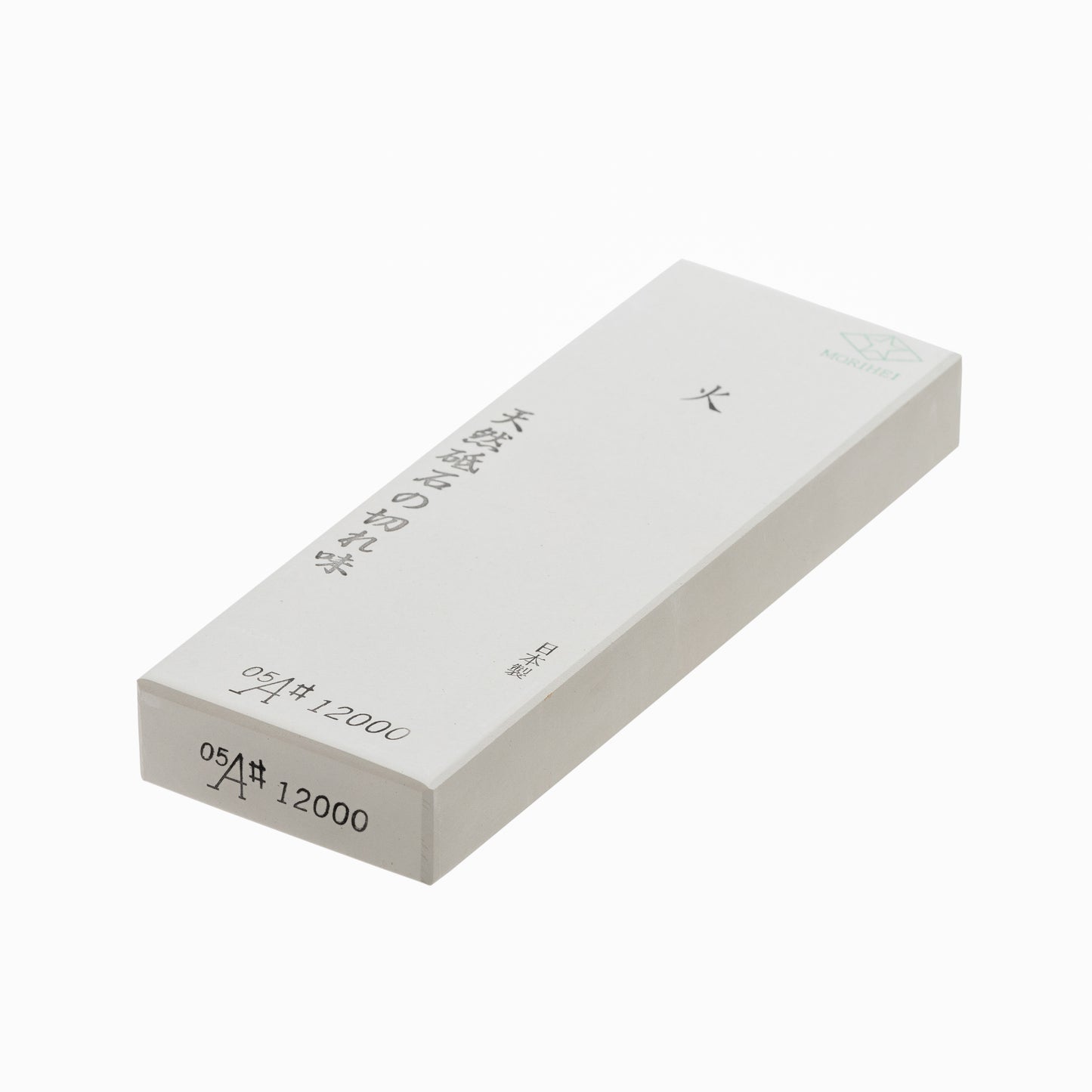
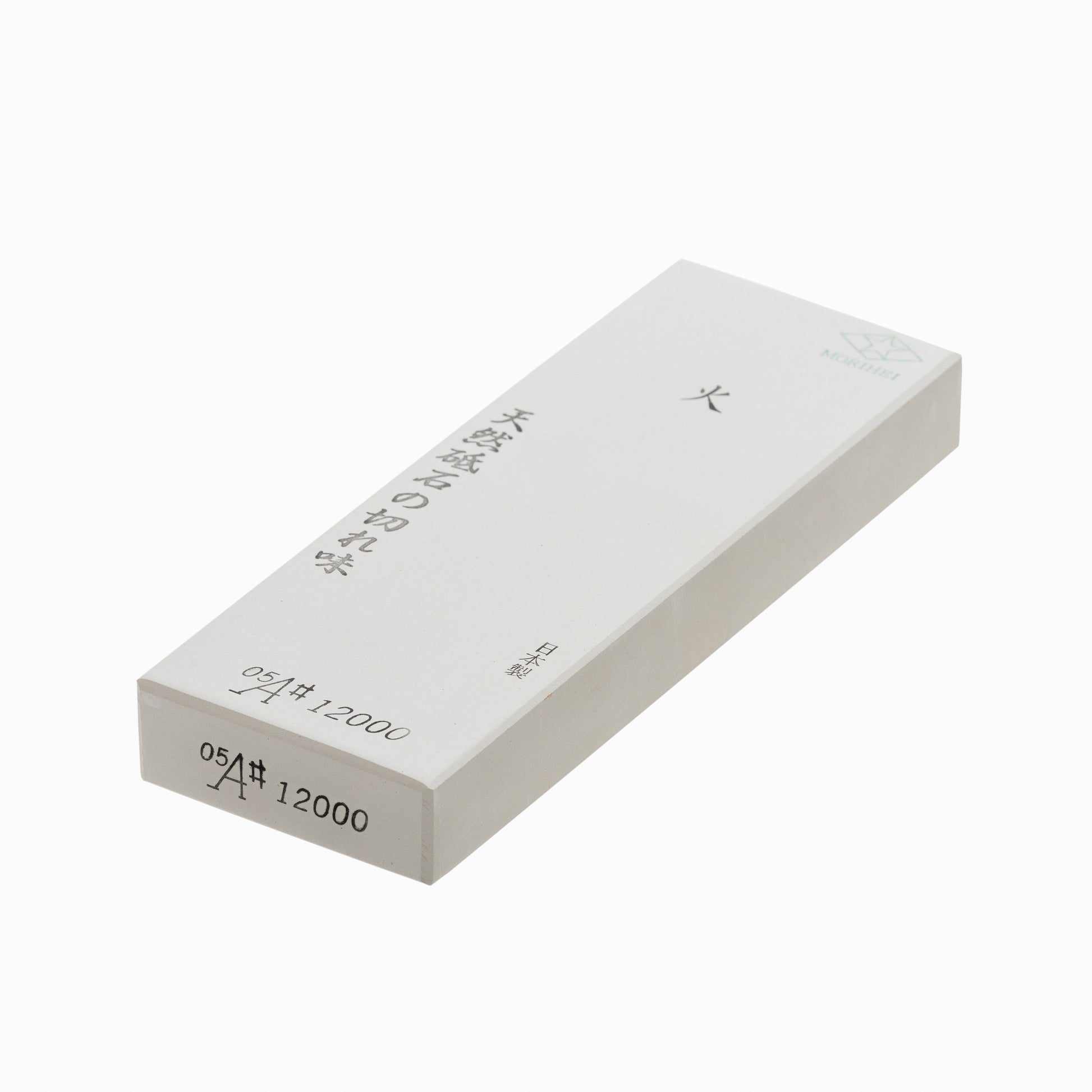
#12000 — Ultra-finishing
Cutting performance close to that of a natural finishing whetstone. When sharpening Japanese knives, it achieves a beautiful contrast between the soft iron body (jigane) and the hard steel edge (hagane). Use after the #8000.
Specifications
Size: 8.2 × 2.9 × 0.9 in (210 × 75 × 25 mm)
Weight: 29.2 oz (830 g)
Material: Natural stone, silica stone, and other materials
Shipping
Ships within 1 week · Shipping cost included in price
Note
Avoid storage in high-temperature or high-humidity environments, which may cause deformation or deterioration.
Do not intentionally bend or apply excessive force — this may cause breakage.
As the base is made from natural wood, variations in grain, color, and surface texture are to be expected.
-
Whetstone
-
Whetstone
-
Whetstone
-
Whetstone
-
Whetstone
-
Whetstone