-
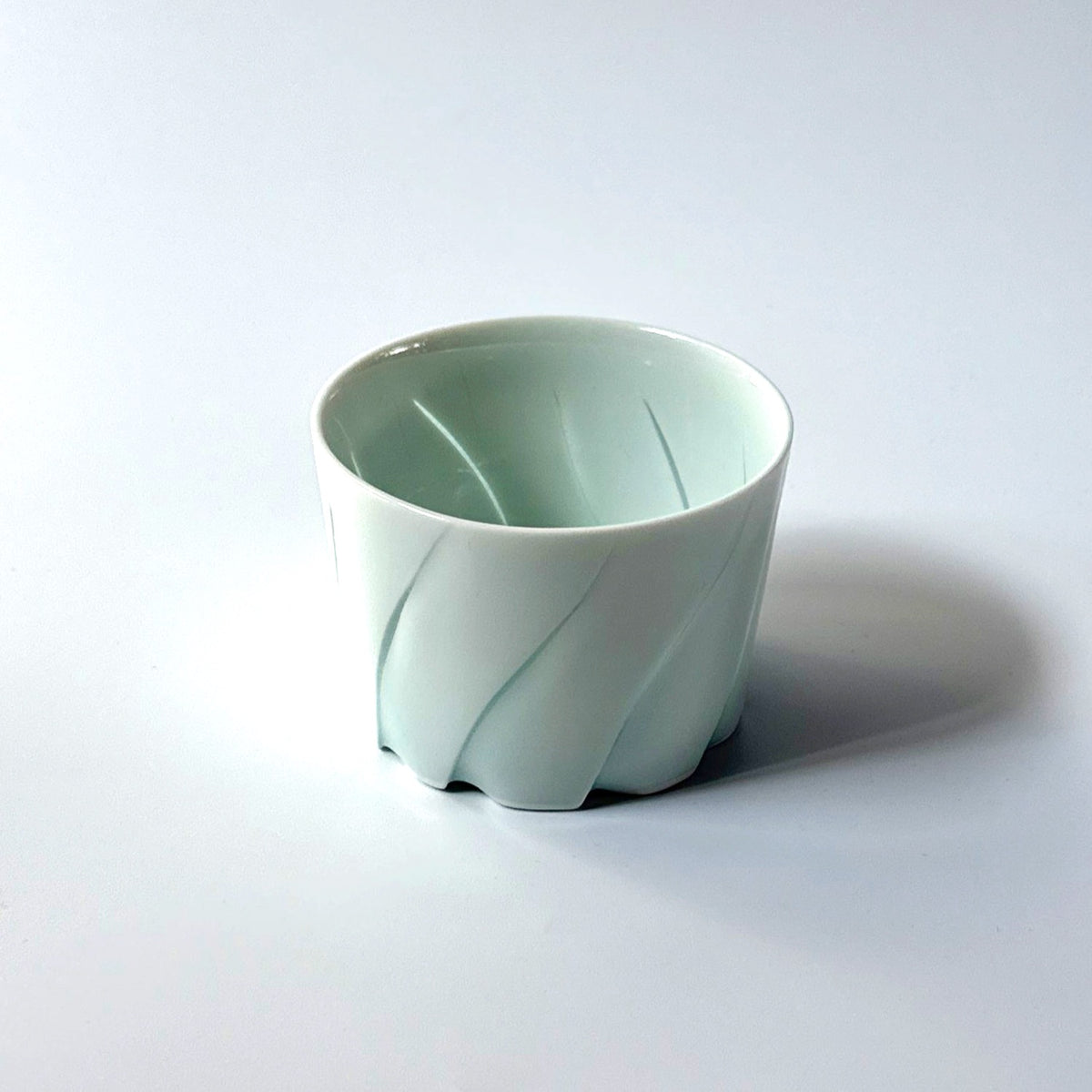
 Hiroshi Taruta Porcelain Rocks Cup (Small)
Style 1: φ 8 × H 5.8 cm -
 Hiroshi Taruta Porcelain Rocks Cup (Small)
Style 1: φ 8 × H 5.8 cm -
 Hiroshi Taruta Porcelain Rocks Cup (Small)
Style 1: φ 8 × H 5.8 cm -
 Hiroshi Taruta Porcelain Rocks Cup (Small)
Style 2: φ 8 × H 5.8 cm -
 Hiroshi Taruta Porcelain Rocks Cup (Small)
Style 2: φ 8 × H 5.8 cm -
 Hiroshi Taruta Porcelain Rocks Cup (Small)
Style 2: φ 8 × H 5.8 cm -
 Hiroshi Taruta Porcelain Rocks Cup (Small)
Style 3: φ 8 × H 5.8 cm -
 Hiroshi Taruta Porcelain Rocks Cup (Small)
Style 3: φ 8 × H 5.8 cm -
 Hiroshi Taruta Porcelain Rocks Cup (Small)
Style 3: φ 8 × H 5.8 cm -
 Hiroshi Taruta Porcelain Rocks Cup (Small)
Style 4: φ 8 × H 5.8 cm -
 Hiroshi Taruta Porcelain Rocks Cup (Small)
Style 4: φ 8 × H 5.8 cm -
 Hiroshi Taruta Porcelain Rocks Cup (Small)
Style 4: φ 8 × H 5.8 cm


Hiroshi Taruta Seto Porcelain Rocks Cup (Small)
Seto Porcelain Rocks Cup (Small)
Couldn't load pickup availability
Porcelain cup · Hotarude · Hiroshi Taruta · Seto
- 01 Linear Hotarude — a pale blue light glows through lines carved into white porcelain
- 02 A smaller version of Taruta's rocks cup, at 3.1 in (80 mm) across and 2.3 in (58 mm) high
- 03 Thrown and carved by hand in Seto, so each piece varies slightly in form
Linear Hotarude: pale blue light through carved white porcelain
Through lines incised into white porcelain, a soft, pale blue light shows through. This is Hotarude: the vessel is first thrown on the wheel, then carved through, and the openings are filled with transparent glaze before it is fired. The name means "firefly style," after the points of light that glow through the vessel like fireflies at night. The technique originated in Ming dynasty China (1368–1644), where it is known as linglong; in English, it is often called "rice grain" porcelain.
Named Hikari Matou (“clad in light”), this rocks cup is made for drinks over ice. It is smaller than Taruta’s standard rocks cup (Ø 3.3 in / 85 mm × H 3.0 in / 75 mm), suited to a shorter pour. For a more generous size, see the Seto Porcelain Rocks Cup; for tea, see his Seto Porcelain Tea Cup.
Lines, not circles — a technique that allows no compromise
Hotarude leaves no room for error. Carving through porcelain reduces its structural strength, so the risk of cracking is high and every stage of the process demands full attention. While most Hotarude and rice grain porcelain use small round or grain-shaped openings, Taruta works with linear slits instead. This approach is considerably more difficult, but the light that emerges through them — like light breaking through clouds — is unlike anything the conventional form produces.
Pour whisky or any drink over ice, and the light shimmers along with the liquid inside. Each piece is handmade and varies slightly in form.
Hiroshi Taruta, a porcelain artist working in Seto
Hiroshi Taruta works from his studio in Seto, Aichi Prefecture — a city long celebrated for its pottery tradition, Seto ware (Seto-yaki). His choice to pursue linear Hotarude came from a desire to do what others do not. A turning point came in 2015, when he spent ten months in Europe. There, the same pieces that people in Japan had sometimes described as having a European quality were received as distinctly Japanese. Seeing his work labeled differently depending on who was looking and where, he began to ask what would make it unmistakably his own, and he found his answer in taking Hotarude as far as it could go.


meet the artisans
Hiroshi Taruta
Read the brand story →
Specifications
Artist: Hiroshi Taruta
Dimensions: Ø 3.1 in (80 mm) × H 2.3 in (58 mm)
Material: Porcelain
Technique: Wheel-thrown, carved, linear Hotarude
Styles: 4 (each piece is handmade and varies slightly)
Shipping
Ships within 1 week · Shipping cost included in price
Care
The carved sections are filled with glaze rather than solid porcelain. Handle with care and avoid knocking the cup against hard surfaces.
Not microwave or dishwasher safe. Please wash by hand with a soft sponge.
Note
This item does not come with a box.
-
Hiroshi Taruta Porcelain Rocks Cup (Small)
Style 1: φ 8 × H 5.8 cm -
Hiroshi Taruta Porcelain Rocks Cup (Small)
Style 1: φ 8 × H 5.8 cm -
Hiroshi Taruta Porcelain Rocks Cup (Small)
Style 1: φ 8 × H 5.8 cm -
Hiroshi Taruta Porcelain Rocks Cup (Small)
Style 2: φ 8 × H 5.8 cm -
Hiroshi Taruta Porcelain Rocks Cup (Small)
Style 2: φ 8 × H 5.8 cm -
Hiroshi Taruta Porcelain Rocks Cup (Small)
Style 2: φ 8 × H 5.8 cm -
Hiroshi Taruta Porcelain Rocks Cup (Small)
Style 3: φ 8 × H 5.8 cm -
Hiroshi Taruta Porcelain Rocks Cup (Small)
Style 3: φ 8 × H 5.8 cm -
Hiroshi Taruta Porcelain Rocks Cup (Small)
Style 3: φ 8 × H 5.8 cm -
Hiroshi Taruta Porcelain Rocks Cup (Small)
Style 4: φ 8 × H 5.8 cm -
Hiroshi Taruta Porcelain Rocks Cup (Small)
Style 4: φ 8 × H 5.8 cm -
Hiroshi Taruta Porcelain Rocks Cup (Small)
Style 4: φ 8 × H 5.8 cm