-
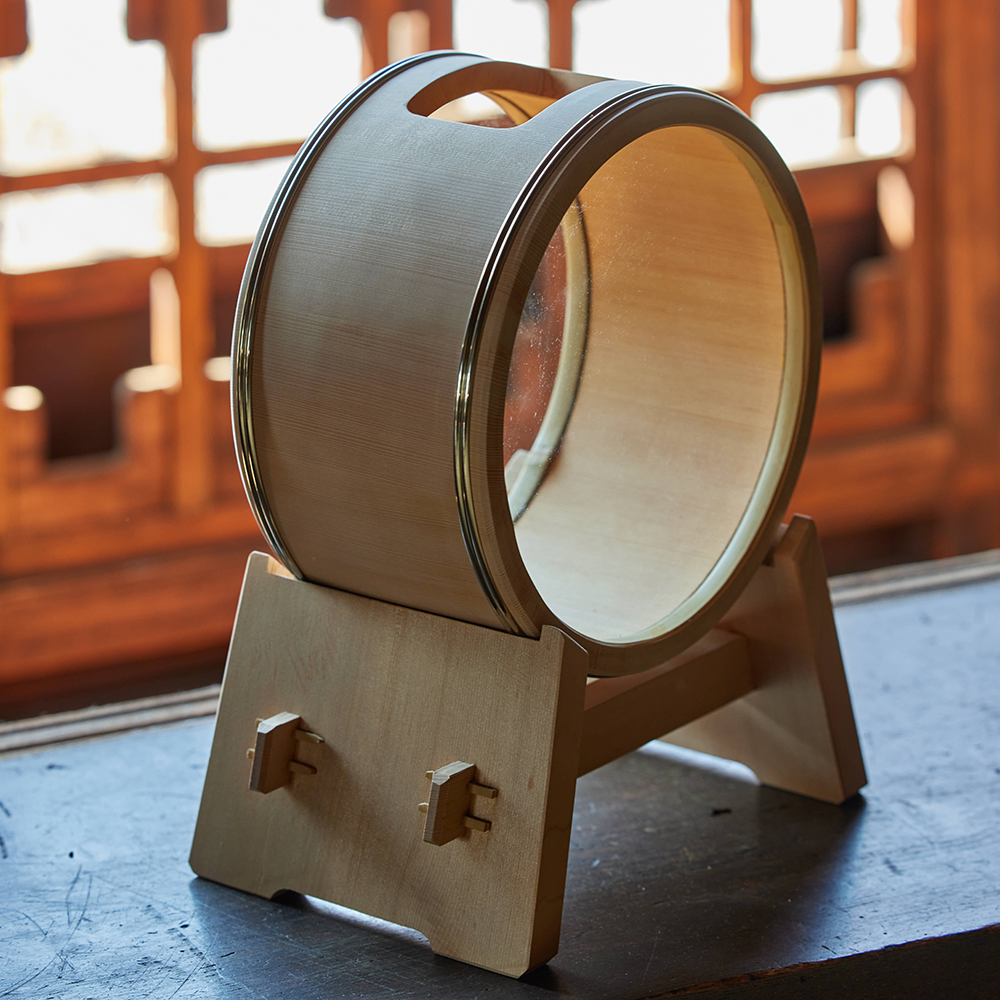
 OKE-EI Natural Wood Goldfish Bowl
 -
 OKE-EI Natural Wood Goldfish Bowl
 -
 OKE-EI Natural Wood Goldfish Bowl


Oke-Ei Natural Wood Goldfish Bowl
Natural Wood Goldfish Bowl
Couldn't load pickup availability
Yuioke · 700-year tradition · Oke-Ei, Fukagawa, Tokyo
"I believe I am the only person still making these in Tokyo."
OKE-EI has continued the tradition of Edo-style yuioke — traditional Japanese wooden vessels — in Fukagawa, Tokyo for generations. The fourth-generation craftsman, Eifu Kawamata, is the final master to inherit these techniques at their highest level.

A goldfish bowl as it once was
Before glass became the standard, goldfish were kept in wooden vessels — a practice rooted in the Edo period, when goldfish-keeping was one of the great pleasures of townspeople's summers. This goldfish bowl by OKE-EI recovers that form: the natural grain of uncoated wood, the faint scent of cypress and sawara, and the particular quality of light that comes through water held in something alive. A scene from a Nishiki-e woodblock print, made present.

The pure beauty of OKE-EI's yuioke
The yuioke technique was established in Japan nearly 700 years ago. Thin wooden staves are arranged and bound with hoops — a form that has remained unchanged for centuries. Polished without paint or coating, the grain reads as something living rather than manufactured. The Fukagawa district where OKE-EI is based was once lined with hundreds of timber merchants; crossing the Eitai Bridge, the smell of wood filled the air. That world is largely gone, but OKE-EI remains.

300-year-old Kiso timber, chosen for what it becomes
OKE-EI uses only two materials: natural sawara cypress and hinoki cypress from the Kiso region, both aged over 300 years. Over centuries, the grain tightens and clarifies — the wood becomes resistant to warping, smooth to the touch, light in the hand, and naturally antimicrobial and water-resistant. These are not incidental qualities. They are the reason this timber, and no other, is used.

The bucket detaches for easy water changes
80 steps, two years, ten years to master each stage
Yuioke-making is one of the most complex traditional crafts in Japan. From log preparation to completion, the process involves approximately 80 steps, and each piece requires at least two years to finish. Mastering every stage takes about ten years — a rarity that speaks to the depth of this skill. The core of the craft lies in the precise joining of wooden staves: work that demands far greater accuracy than factory production, and that cannot be approximated by machine.
Place it on a veranda, in an entrance, or at the center of a room. With goldfish, it becomes a scene. Without, it holds its presence as an object. Either way, it carries the quality of something made to outlast its maker.
Specifications
W 14.2 × D 10.6 × H 18.1 in (360 × 270 × 460 mm)
Material: Natural sawara cypress · natural hinoki cypress (Kiso region, aged 300+ years)
Finish: Uncoated · polished
The wooden bucket is removable for easy water changes
Shipping
Ships within 2 weeks · Shipping cost included in price
If stock is not immediately available, this piece is made to order and will ship within a few months. To confirm lead time before ordering, please contact us via chat or the inquiry form.
Care
Rinse with clean water after use and dry thoroughly in a well-ventilated area — avoid prolonged exposure to direct sunlight.
Do not soak for extended periods or leave standing water inside when not in use.
The wood will naturally darken and develop character over time; this is part of the material, not a defect.
Do not use detergent — water only.
-
OKE-EI Natural Wood Goldfish Bowl
-
OKE-EI Natural Wood Goldfish Bowl
-
OKE-EI Natural Wood Goldfish Bowl