-
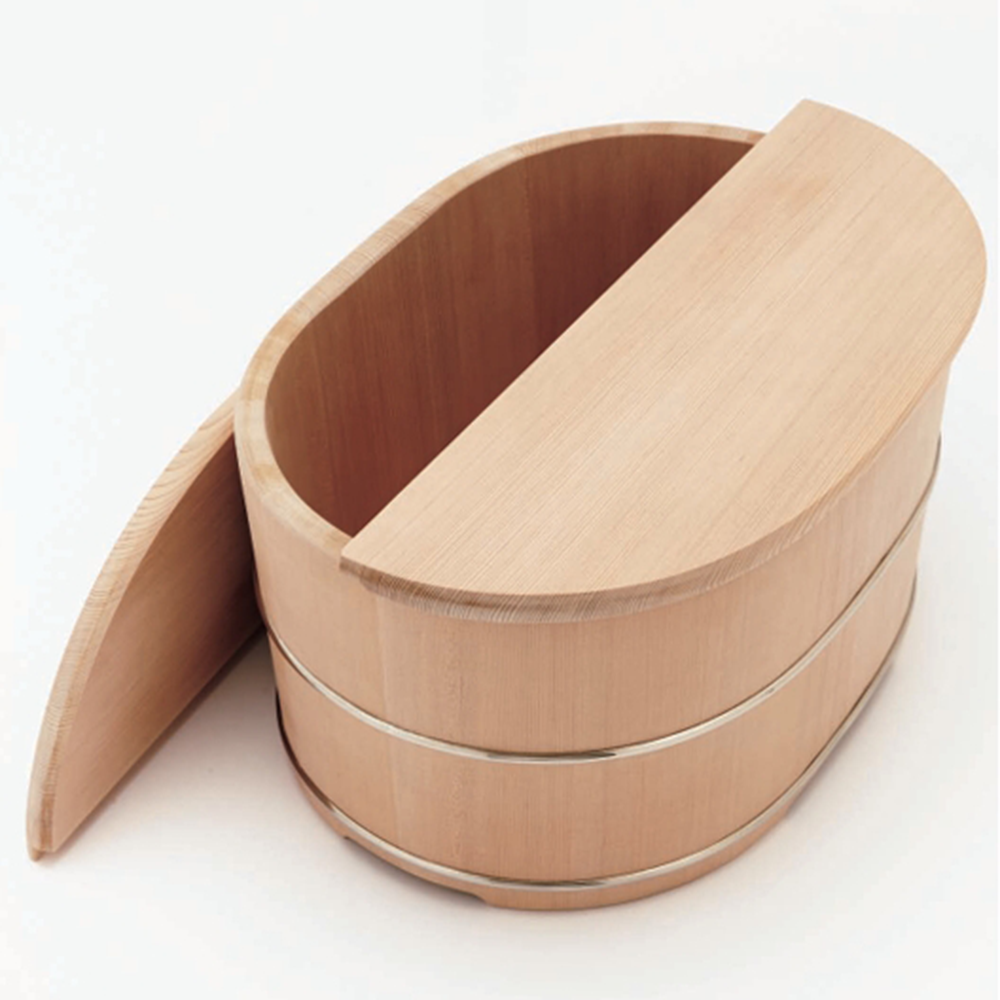
 OKE-EI Natural Wood Oval Container
 -
 OKE-EI Natural Wood Oval Container
 -
 OKE-EI Natural Wood Oval Container
 -
 OKE-EI Natural Wood Oval Container
 -
 OKE-EI Natural Wood Oval Container


Oke-Ei Natural Wood Oval Container
Natural Wood Oval Container
Couldn't load pickup availability
Yuioke · 700-year tradition · Oke-Ei, Fukagawa, Tokyo
"I believe I am the only person still making these in Tokyo."
OKE-EI has continued the tradition of Edo-style yuioke — traditional Japanese wooden vessels — in Fukagawa, Tokyo for generations. The fourth-generation craftsman, Eifu Kawamata, is the final master to inherit these techniques at their highest level.

The pure grain of OKE-EI yuioke
The pure beauty of OKE-EI's yuioke
The yuioke technique was established in Japan nearly 700 years ago. Thin wooden staves are arranged and bound with hoops — a form that has remained unchanged for centuries. Polished without paint or coating, the grain reads as something living rather than manufactured. The Fukagawa district where OKE-EI is based was once lined with hundreds of timber merchants; crossing the Eitai Bridge, the smell of wood filled the air. That world is largely gone, but OKE-EI remains.
300-year-old Kiso timber, chosen for what it becomes
OKE-EI uses only two materials: natural sawara cypress and hinoki cypress from the Kiso region, both aged over 300 years. Over centuries, the grain tightens and clarifies — the wood becomes resistant to warping, smooth to the touch, light in the hand, and naturally antimicrobial and water-resistant. These are not incidental qualities. They are the reason this timber, and no other, is used.
80 steps, two years, ten years to master each stage
Yuioke-making is one of the most complex traditional crafts in Japan. From log preparation to completion, the process involves approximately 80 steps, and each piece requires at least two years to finish. Mastering every stage takes about ten years — a rarity that speaks to the depth of this skill.


The many tools of yuioke-making
"The essence of traditional yuioke is the joining of wood to wood — a precision that no factory process can replicate."
— Eifu Kawamata, fourth-generation master, OKE-EI
A new form for a changed life — the Container Series
Inspired by the chawan mizusashi — the water vessel used in Japanese tea ceremony — the Container Series was designed by the fourth-generation Eifu Kawamata to work in contemporary settings. The oval form is clean and unornamented, pairing equally well with a modern kitchen, a dining table set with linen, or a minimalist interior. Where earlier yuioke used copper hoops, the Container Series uses German silver (an alloy of copper, nickel, and zinc) — resistant to tarnish and corrosion, with a refined, lasting luster.

The straight grain of sawara cypress
Use it for cooked rice — the uncoated wood absorbs excess moisture and keeps each grain distinct. Or use it for bread, fruit, ice, or whatever the table calls for. A faint, clean scent of cypress rises when opened. Built to last a lifetime; made to be used every day.
Specifications
W 12.2 × D 8.9 × H 5.9 in (310 × 225 × 150 mm)
Material: Sawara cypress (Chamaecyparis pisifera) · German silver hoops
Finish: Uncoated · polished
Shipping
Ships within 2 weeks · Shipping cost included in price
If stock is not immediately available, this piece is made to order and will ship within a few months. To confirm lead time before ordering, please contact us via chat or the inquiry form.
How to Use
Rinse with water or lukewarm water before each use — this helps prevent staining and water marks from forming on the wood.
For use as a rice container: allow cooked rice to release its initial steam before placing the lid on. Rice keeps well for up to 24 hours.
Care
After washing, air dry in a well-ventilated area — do not leave to dry in direct sunlight.
Do not soak in water for extended periods.
Not suitable for microwave use.
Safe to clean with a dish cloth, loofah, or soft sponge.
Mild soap, cream cleanser, or lightly foamed neutral detergent may be used.
-
OKE-EI Natural Wood Oval Container
-
OKE-EI Natural Wood Oval Container
-
OKE-EI Natural Wood Oval Container
-
OKE-EI Natural Wood Oval Container
-
OKE-EI Natural Wood Oval Container