-
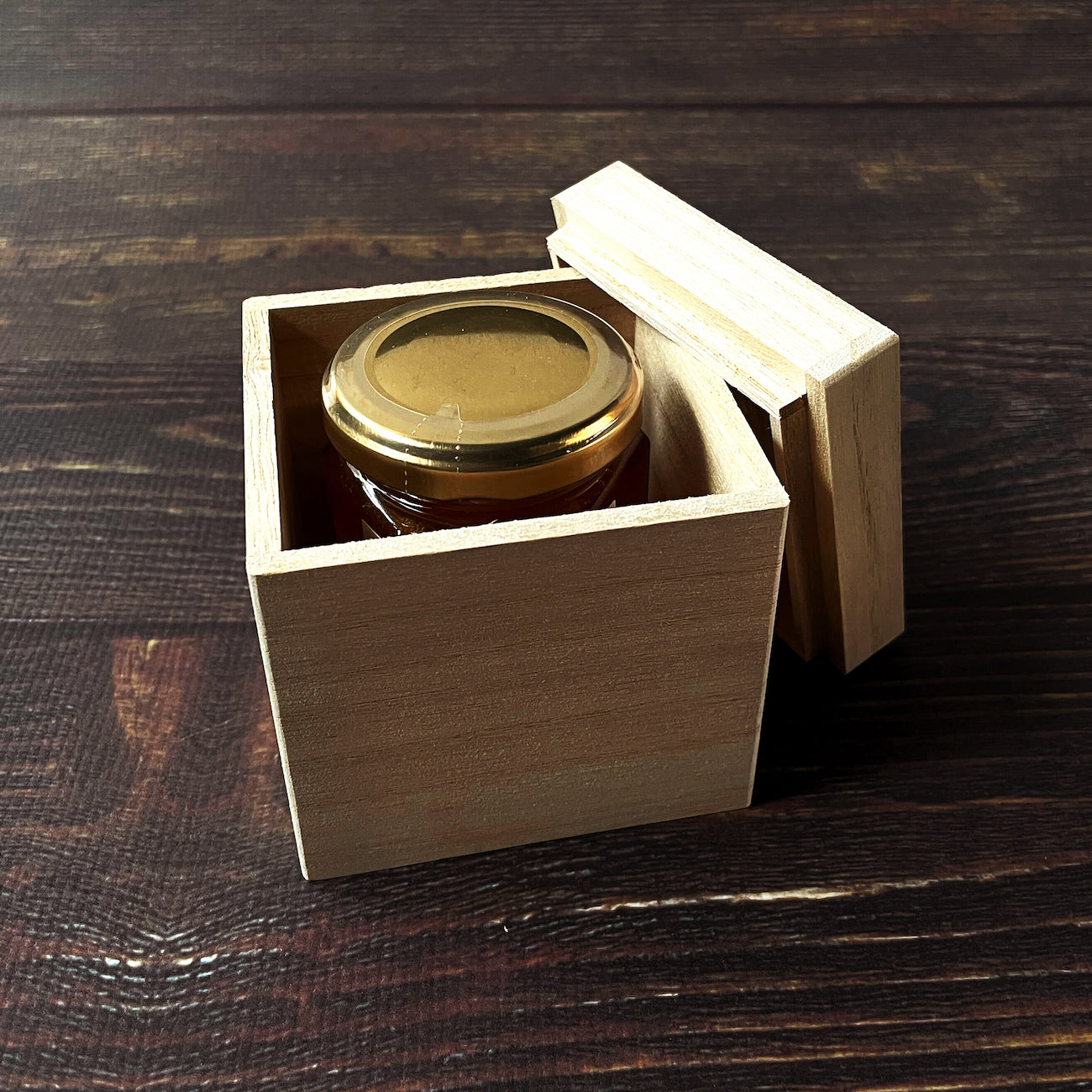
 Raw Japanese Honeybee Honey from Kagoshima
 -
 Raw Japanese Honeybee Honey from Kagoshima
 -
 Raw Japanese Honeybee Honey from Kagoshima
 -
 Raw Japanese Honeybee Honey from Kagoshima
 -
 Raw Japanese Honeybee Honey from Kagoshima
 -
 Raw Japanese Honeybee Honey from Kagoshima
 -
 Raw Japanese Honeybee Honey from Kagoshima


Raw Japanese Honeybee Honey from Kagoshima
Raw Japanese Honeybee Honey from Kagoshima
Couldn't load pickup availability
Raw Japanese honey · Unheated · Unsweetened · Hetsuka primeval forest · Kagoshima
A honey that stops pastry chefs
When a noted Japanese pastry chef tasted Rin for the first time, the description was immediate: "An interesting depth. A freshness I hadn't encountered before." This is not the sweetness of standard commercial honey — there is no bitterness, no heaviness. What comes through instead is a gentle sweetness with a clean, citrus-edged acidity. Half a teaspoon, eaten slowly, is how the producer suggests experiencing it.

Natural crystallization — a characteristic of unheated raw honey
Why Japanese honeybee honey is so rare
Almost all honey in commercial circulation — 99.9% of what is sold in Japan — comes from the Western honeybee (Apis mellifera), a species that has been domesticated for beekeeping over centuries and will reliably stay in a placed hive. The Japanese honeybee (Apis cerana japonica) is an entirely different animal. It is wild, highly sensitive to its environment, and will abandon a hive if temperature, humidity, or any number of other conditions are not to its liking. There are years when no harvest is possible at all. Even trace amounts of pesticide from a distant field can eliminate a colony entirely. Japanese honeybee honey cannot be produced at industrial scale — by nature, it cannot be.
The nectar source — a primeval forest at the southern tip of Kagoshima
What honey tastes like depends entirely on what the bees collect. The Hetsuka area in the Sata district of Kagoshima Prefecture — at the southernmost point of the Kyushu mainland — is home to one of the largest remaining primeval laurel forests in western Japan, designated as a natural environment conservation area. The forest has never been managed or cultivated. Evergreen broadleaf trees, wild flowers, and medicinal herbs that have grown here since before human settlement flower continuously through the seasons.

The primeval forest of Hetsuka — designated natural conservation area
Among the species the bees visit: Hetsuka-ran, a rare orchid endemic to this area, and Hetsuka-daidai, a local citrus variety that grows wild here. During the Edo period, this land was used as a medicinal herb garden by the Satsuma domain. Wild medicinal plants still grow throughout the forest. The bees draw from all of it — which is why the honey has the particular acidity and complexity it does.
Six days of hand-filtering — no machines, no heat, no additives
When honey is harvested, pollen, bee larvae, and other natural material come with it. Many beekeepers remove the visible impurities and press the rest mechanically — it is faster. Kumano-hoso-san, the producer of Rin, uses no machinery. The honey is filtered entirely by hand: in the first pass, it drips for four days. In the second, two days more. The result is 100% pure raw honey — unheated, unsweetened, and visually checked throughout to prevent any impurity from passing through.

Kumano-hoso-san — hand-built wooden hives, tended like family
The hives themselves are handmade from wood. Kumano-hoso-san tends them through the year — keeping predatory insects away, monitoring the colony — in order to be in a position to do this final, unhurried work of filtration once a year. The care put into the harvest is not separate from the care put into the keeping. It is the same thing, expressed at the end of a long season.
Specifications
Contents: 120 g
Type: Raw Japanese honeybee honey (Apis cerana japonica)
Nectar source: Primeval laurel forest, Hetsuka, Sata district, Kagoshima Prefecture
Processing: Unheated · unsweetened · hand-filtered (6 days total)
Best before: February 2027 (Reiwa 9)
Nutrition per 100 g:
Energy 326 kcal · Protein 0.3 g · Fat 0.1 g · Carbohydrate 81 g · Sodium equivalent 0.01 g
Ingredients
Honey (Japanese honeybee, Hetsuka, Kagoshima, Japan)
No additives · no heating · no added sugar
Storage & How to Open
Store away from direct sunlight at room temperature. Refrigerate after opening.
Because this honey is raw and unheated, natural fermentation continues inside the jar. When opening, place a cloth over the lid and open slowly — you may hear a soft pop or fizz as the pressure releases. This is a sign that the honey is alive and active, not a defect.
After opening, stir gently with a spoon before eating. The honey may separate into fermented and non-fermented layers — mix well before use.
Crystallization is a natural characteristic of raw unheated honey and does not affect quality or flavor. To return crystallized honey to a liquid state, place the jar in warm water (not hot).
Shipping
Ships within 1 week · Shipping cost included in price
Note
Not suitable for infants under 12 months of age.
Please note that import duties, taxes, and customs clearance fees are the responsibility of the buyer. We cannot guarantee customs clearance in all countries. Products are shipped from Japan as personal imports.
Honey is subject to strict import regulations in some countries. In particular, the EU restricts imports of animal-derived food products including honey, and Australia subjects honey to quarantine inspection — shipments may be seized or returned at the border regardless of quantity. Buyers in these regions are strongly encouraged to check the import regulations applicable to their country before placing an order.
Please note that all product labels and packaging are written in Japanese only. Ingredient information and storage instructions are listed on this product page.
Some food products may not be eligible for shipment to certain countries or regions due to local import regulations. If we are unable to ship your order to the specified destination, we will cancel the affected item and issue a full refund.
-
Raw Japanese Honeybee Honey from Kagoshima
-
Raw Japanese Honeybee Honey from Kagoshima
-
Raw Japanese Honeybee Honey from Kagoshima
-
Raw Japanese Honeybee Honey from Kagoshima
-
Raw Japanese Honeybee Honey from Kagoshima
-
Raw Japanese Honeybee Honey from Kagoshima
-
Raw Japanese Honeybee Honey from Kagoshima