-
 Susumuya Chaten Japanese Sencha Tasting Set
2 bottles -
 Susumuya Chaten Japanese Sencha Tasting Set
3 bottles -
 Susumuya Chaten Japanese Sencha Tasting Set
Brewed Sencha and Tea Leaves -
 How to brew sencha, demonstrated by Susumuya Chaten.
-
 Susumuya Chaten Gift Wrapping
-
 Susumuya Chaten Gift Wrapping
-
 Susumuya Chaten, a tea shop born from a Kagoshima tea wholesaler of over 100 years
-
 Each year, tea master Kotaro Shinbara judges hundreds of lots to find the finest leaf
-
 From Kagoshima’s tea fields, Susumuya Chaten shares its tea and a freer way to enjoy it


Susumuya Chaten Japanese Sencha Tasting Set
Japanese Sencha Tasting Set
Couldn't load pickup availability
Sencha green tea Tasting Set ・ First Flush ・ Kagoshima, Japan
Signature Sencha in Cans — A Gift for Any Occasion
Sencha is the most everyday of Japan's green teas — fresh leaves are steamed, rolled, and dried, a process that keeps their bright green color and brings out a gentle umami. This gift set brings together the signature senchas of Kagoshima tea specialist Susumuya Chaten, so they can be tasted side by side: Kokumaro and Fukami to Koku, joined in the three-can set by Saemidori, a tea sometimes called the "yokozuna of Japanese tea" — yokozuna being the highest rank in sumo. Choose from a set of two or three cans. It suits any occasion when you want to send something thoughtful.

A sencha tasting set that suits almost any occasion
Three Senchas, Three Expressions of Kagoshima
Kokumaro, Susumuya Chaten's signature tea, is defined by natural sweetness and a rounded, mellow body. Fukami to Koku — "depth and body" — lives up to its name with a bold, rich, full character. The three-can set adds Saemidori, a single-cultivar tea whose deep sweetness and elegant taste have earned it that "yokozuna" title. Tasted side by side, they show just how much range Kagoshima tea has to offer.
Choosing tea the way you choose coffee — Kagoshima green tea, presented honestly
Susumuya Chaten is a Japanese tea specialist born from a tea wholesaler with more than 100 years of history in Kagoshima, the prefecture at the southern tip of Kyushu. It deals exclusively in Kagoshima tea, including Chiran and Kirishima teas, named for growing districts within the prefecture. Its fourth-generation president, Kotaro Shinbara, set out to address a contradiction.
"Kagoshima is one of Japan's leading tea regions, and it has now overtaken Shizuoka to become the country's largest producer — it grows a full third of all Japanese tea. Yet most of it is shipped out of the prefecture and disappears as raw material for blends. The region's name never makes it onto the label, there are few specialist tea shops in Kagoshima itself, and the tea simply sits on supermarket shelves. I want to change how little Kagoshima tea is recognized compared with tea from Shizuoka or Kyoto."
— Kotaro Shinbara, President, Susumuya Chaten
"To share the true quality of Kagoshima tea, just as it is." That wish is where Susumuya Chaten began.
Kagoshima is also known for producing more single-cultivar teas than other regions. In a place where cultivars such as Saemidori, Asatsuyu and Yutakamidori all thrive, Susumuya Chaten's defining approach is a light roast and original blends, each designed to bring out the full character of individual cultivars.

Kagoshima tea, grown from a wide range of cultivars
Just as coffee drinkers choose their beans and roast level, green tea tastes entirely different depending on the cultivar and how long the fresh leaves are steamed. Susumuya Chaten wants to bring the pleasure of knowing those differences — and finding your own favorite cup — into everyday life. Aiming to build a Japanese café culture around tea, much as one has grown around coffee, it runs relaxed, unpretentious tea shops in Kagoshima and Tokyo.

Susumuya Chaten's flagship store in Kagoshima
Sweetness, aroma and color: first-flush green tea, hand-selected and lightly roasted
Susumuya Chaten uses only ichibancha — the first flush, picked in the year's first harvest — and finishes it with its own light roast. Keeping the leaves as close as possible to their fresh state draws out each cultivar's natural flavor, but it leaves no room to hide flaws, and judging the heat demands real skill.

A demanding technique that keeps the leaves close to fresh, drawing out their natural flavor
It all begins with selecting the leaves. Every year in Kagoshima, tea from farms across the prefecture is sold at auction. As a tea master, Shinbara tastes hundreds of lots side by side to identify the finest of the year. Even tea from the same farm changes from year to year with the weather and growing conditions, so he starts from zero each season, committed to choosing that year's very best leaf.

Kotaro Shinbara, president and tea master of Susumuya Chaten
The chosen leaves are carefully sorted by the tea master into two grades according to shape, size and condition, then lightly roasted. Because Japanese green tea is so simple, the character of the land and of the people who make it comes straight through in its flavor and aroma.

Sorted by hand into two grades by shape, size and condition, then lightly roasted
This roasting method, kept unchanged since the shop was founded, is behind what customers tell them: "I can't drink any other tea now," and "It was so good when I received it as a gift that now I want to give it to someone myself." Only when sweetness, aroma and suishoku — the color of the brewed tea — all come together does it become Susumuya Chaten tea.
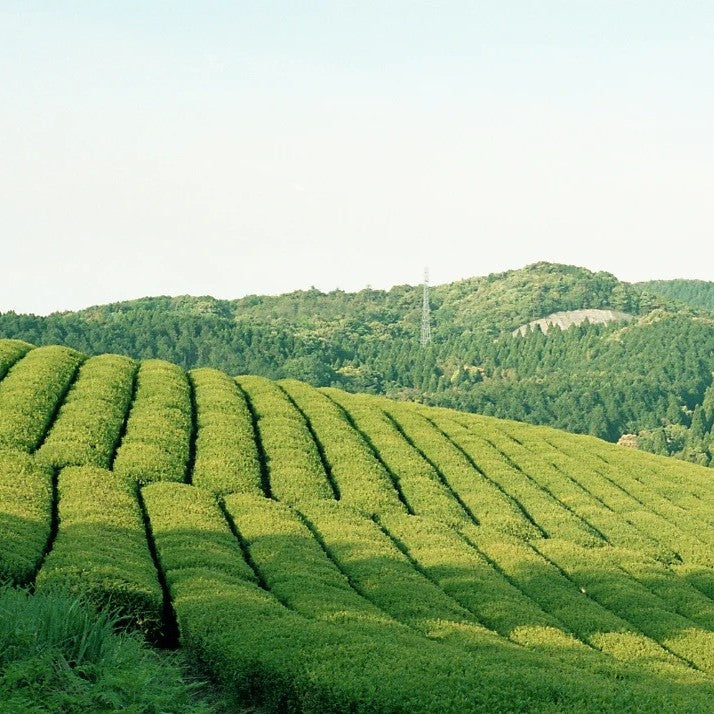
In Kagoshima, properly cold winters let the leaves store up sweetness, and flat growing land makes careful cultivation possible. Susumuya Chaten visits the farms in person and builds close relationships with the growers. Shinbara believes that sharing with them the story of where their tea ends up, and who drinks it, also helps protect its quality.
No special tools or formal rituals are needed. It doesn't even have to be a kyusu, the traditional side-handled Japanese teapot. Building a culture in which tea fits naturally into daily life, in whatever form suits each person — that remains Susumuya Chaten's constant goal.
Japanese tea culture, matcha included, is drawing growing attention from around the world. With that momentum behind it, Susumuya Chaten continues to share the richness of a single cup of tea from Kagoshima, in Japan and beyond.

Sharing Japanese tea with the world, from Kagoshima
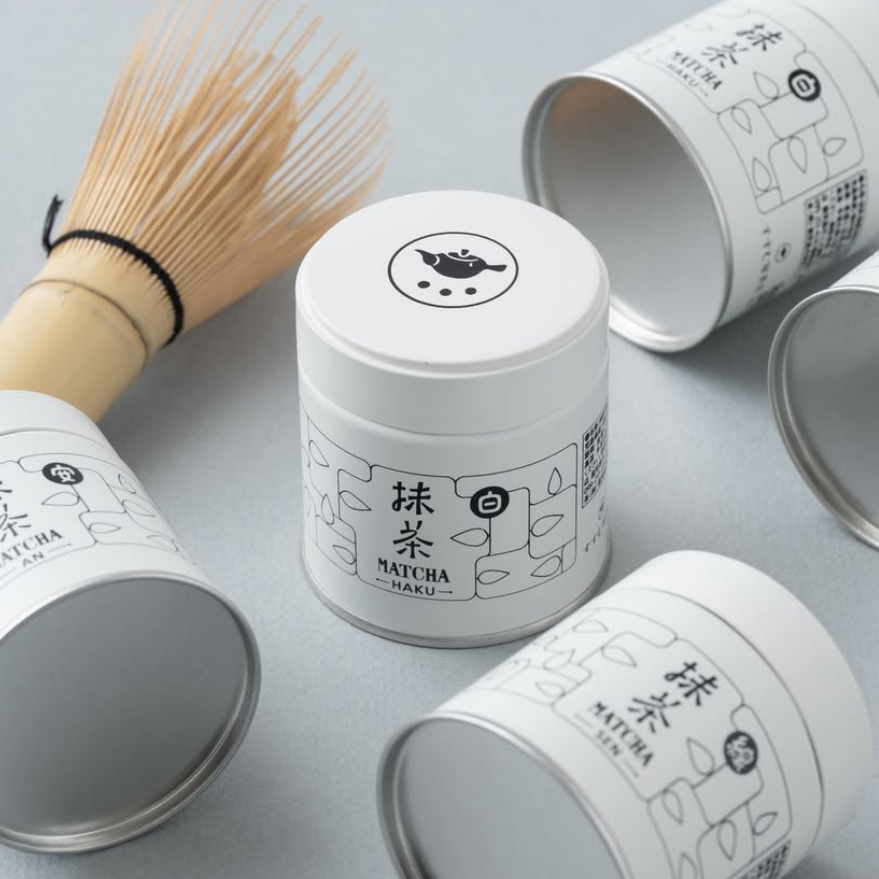
MORE TEA & TEAWARE
Susumuya Chaten
VIEW THE COLLECTION →
If you’re new to Japanese tea, or would like to enjoy it even more, please also take a look at the guide below.

FOR THE PERFECT CUP
How to Brew Japanese Tea for the Best Flavor
READ THE GUIDE →
Specifications
Brand: Susumuya Chaten
2-can set: Kokumaro 2.8 oz (80 g), Fukami to Koku 2.8 oz (80 g)
3-can set: Kokumaro 2.8 oz (80 g), Fukami to Koku 2.8 oz (80 g), Saemidori 2.8 oz (80 g)
Box size (2-can set): H 5.6 in (143 mm) × W 4.6 in (116 mm) × D 2.8 in (72 mm)
Box size (3-can set): H 8.2 in (209 mm) × W 4.6 in (116 mm) × D 2.8 in (72 mm)
Ingredients: Green tea (Kagoshima, Japan)
Best before: 10 months from production
Shipping
Ships within 10 business days ・ Shipping cost included in price
Care
Store away from heat and humidity.
Tea leaves absorb surrounding odors easily — keep them away from strongly scented foods and products.
After opening, close the can tightly and enjoy before the best-before date shown on the package.
How to Use
Brew as you would any loose-leaf green tea — a Japanese kyusu teapot, any small teapot, or a tea infuser all work well.
To compare the teas, brew each one the same way and taste them side by side — the differences in sweetness, body, and aroma come through clearly.
Note
This is a food product. Orders cannot be canceled or changed once placed — please review your order carefully before checkout.
If your order arrives damaged or differs from what you ordered, please contact us within 5 days of delivery; return shipping in such cases is at our expense.
We aim to reproduce color and texture as accurately as possible in our photos, but we're unable to accept returns or exchanges based on differences in appearance.
Import regulations on food products vary by country. Please check your local rules before ordering.
-
Susumuya Chaten Japanese Sencha Tasting Set
2 bottles -
Susumuya Chaten Japanese Sencha Tasting Set
3 bottles -
Susumuya Chaten Japanese Sencha Tasting Set
Brewed Sencha and Tea Leaves -
How to brew sencha, demonstrated by Susumuya Chaten.
-
Susumuya Chaten Gift Wrapping
-
Susumuya Chaten Gift Wrapping
-
Susumuya Chaten, a tea shop born from a Kagoshima tea wholesaler of over 100 years
-
Each year, tea master Kotaro Shinbara judges hundreds of lots to find the finest leaf
-
From Kagoshima’s tea fields, Susumuya Chaten shares its tea and a freer way to enjoy it