-
 Susumuya Chaten Susumu Dobin Teapot, Small (1–2 people): approx. 16.9 fl oz (500 ml)
H 6.3 in (160 mm) incl. handle, W 6.3 in (160 mm) incl. spout -
 Susumuya Chaten Susumu Dobin Teapot, Large (3–4 people): approx. 30.4 fl oz (900 ml)
H 7.9 in (200 mm) incl. handle, W 7.5 in (190 mm) incl. spout -
 Susumuya Chaten Susumu Dobin Teapot
Small (1–2 people): approx. 16.9 fl oz (500 ml), Large (3–4 people): approx. 30.4 fl oz (900 ml) -
 Susumuya Chaten Susumu Dobin Teapot
Lift it from the side and pour without straining your wrist — the lid stays in place -
 Susumuya Chaten Susumu Dobin Teapot
The handle folds down for compact storage -
 Susumuya Chaten Susumu Dobin Teapot
Small (1–2 people): approx. 16.9 fl oz (500 ml), Large (3–4 people): approx. 30.4 fl oz (900 ml) -
 Susumuya Chaten Susumu Dobin Teapot
A modern design pairing white Arita porcelain with a brass handle -
 Susumuya Chaten Susumu Dobin Teapot
The brass handle develops a deeper patina over time -
 Susumuya Chaten Susumu Dobin Teapot
Small (1–2 people): approx. 16.9 fl oz (500 ml), Large (3–4 people): approx. 30.4 fl oz (900 ml) -
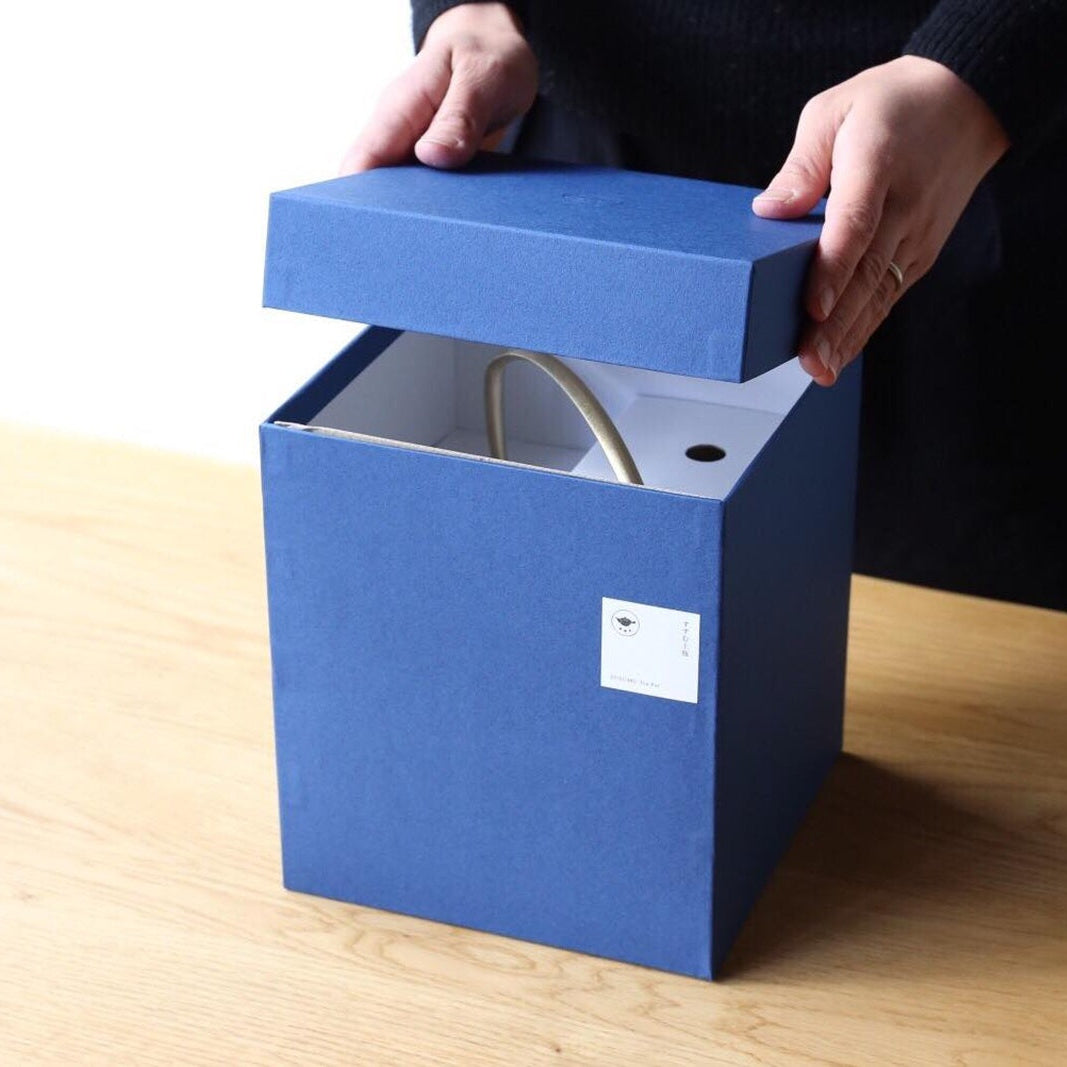
 Delivered in its own dedicated box
 -
 Delivered in its own dedicated box


Susumuya Chaten Susumu Dobin Teapot
Susumu Dobin Teapot
Couldn't load pickup availability
White Arita Porcelain & Brass · Side-Grip Pouring · Susumuya Chaten
- 01 Lift it by the brass handle from the side and pour without straining your wrist
- 02 A lid that stays in place, even when the pot is lifted from the side
- 03 White porcelain and brass, made to be left out on the table after tea
An ideal made real: a modern porcelain teapot where function and form meet
A beautiful, modern teapot made for the way we live now. The Susumu Dobin is an original design by tea specialist Susumuya Chaten, pairing white Arita porcelain with a brass handle — the teapot its makers had always imagined, finally given form. A dobin is a teapot carried by a handle that arches over the top, rather than one fixed to the side. This one sits naturally on a dining table or in a living room, and is meant to stay out even after the tea is finished: a piece shaped with equal care for function and form.

A modern teapot in Arita porcelain and brass
The handle is where the design work went deepest. Gripping it from the side and lifting keeps the strain off your wrist, and lets you pour smoothly for someone sitting across from you. A purpose-designed projection holds the lid in place, so it won't slip off even when the pot is lifted from the side — every detail considered for easy pouring. When you're done, the handle folds down so the teapot stores compactly.

Lifted from the side, it pours easily — even for the person across the table

The handle folds down for compact storage
The capacity is deliberately generous — a relaxed size that doesn't ask for precise measuring. Brew your everyday loose-leaf tea in a moment and share it with family or guests. It comes in two sizes: Small, for one to two people, and Large, for three to four.
The porcelain comes from Arita, a town in Saga Prefecture on the southern Japanese island of Kyushu that has been a center of porcelain making since the early 17th century. The brass handle deepens in tone with use. Behind it all is one ambition — "to make the finest tea ware there has ever been" — and the result is Susumuya Chaten's proposal for a new kind of teapot.
Choosing tea the way you choose coffee — Kagoshima green tea, presented honestly
Susumuya Chaten is a Japanese tea specialist born from a tea wholesaler with more than 100 years of history in Kagoshima, the prefecture at the southern tip of Kyushu. It deals exclusively in Kagoshima tea, including Chiran and Kirishima teas, named for growing districts within the prefecture. Its fourth-generation president, Kotaro Shinbara, set out to address a contradiction.
"Kagoshima is one of Japan's leading tea regions, and it has now overtaken Shizuoka to become the country's largest producer — it grows a full third of all Japanese tea. Yet most of it is shipped out of the prefecture and disappears as raw material for blends. The region's name never makes it onto the label, there are few specialist tea shops in Kagoshima itself, and the tea simply sits on supermarket shelves. I want to change how little Kagoshima tea is recognized compared with tea from Shizuoka or Kyoto."
— Kotaro Shinbara, President, Susumuya Chaten
"To share the true quality of Kagoshima tea, just as it is." That wish is where Susumuya Chaten began.
Kagoshima is also known for producing more single-cultivar teas than other regions. In a place where cultivars such as Saemidori, Asatsuyu and Yutakamidori all thrive, Susumuya Chaten's defining approach is a light roast and original blends, each designed to bring out the full character of individual cultivars.

Kagoshima tea, grown from a wide range of cultivars
Just as coffee drinkers choose their beans and roast level, green tea tastes entirely different depending on the cultivar and how long the fresh leaves are steamed. Susumuya Chaten wants to bring the pleasure of knowing those differences — and finding your own favorite cup — into everyday life. Aiming to build a Japanese café culture around tea, much as one has grown around coffee, it runs relaxed, unpretentious tea shops in Kagoshima and Tokyo.

Susumuya Chaten's flagship store in Kagoshima
Sweetness, aroma and color: first-flush green tea, hand-selected and lightly roasted
Susumuya Chaten uses only ichibancha — the first flush, picked in the year's first harvest — and finishes it with its own light roast. Keeping the leaves as close as possible to their fresh state draws out each cultivar's natural flavor, but it leaves no room to hide flaws, and judging the heat demands real skill.

A demanding technique that keeps the leaves close to fresh, drawing out their natural flavor
It all begins with selecting the leaves. Every year in Kagoshima, tea from farms across the prefecture is sold at auction. As a tea master, Shinbara tastes hundreds of lots side by side to identify the finest of the year. Even tea from the same farm changes from year to year with the weather and growing conditions, so he starts from zero each season, committed to choosing that year's very best leaf.

Kotaro Shinbara, president and tea master of Susumuya Chaten
The chosen leaves are carefully sorted by the tea master into two grades according to shape, size and condition, then lightly roasted. Because Japanese green tea is so simple, the character of the land and of the people who make it comes straight through in its flavor and aroma.

Sorted by hand into two grades by shape, size and condition, then lightly roasted
This roasting method, kept unchanged since the shop was founded, is behind what customers tell them: "I can't drink any other tea now," and "It was so good when I received it as a gift that now I want to give it to someone myself." Only when sweetness, aroma and suishoku — the color of the brewed tea — all come together does it become Susumuya Chaten tea.
In Kagoshima, properly cold winters let the leaves store up sweetness, and flat growing land makes careful cultivation possible. Susumuya Chaten visits the farms in person and builds close relationships with the growers. Shinbara believes that sharing with them the story of where their tea ends up, and who drinks it, also helps protect its quality.
No special tools or formal rituals are needed. It doesn't even have to be a kyusu, the traditional side-handled Japanese teapot. Building a culture in which tea fits naturally into daily life, in whatever form suits each person — that remains Susumuya Chaten's constant goal.
Japanese tea culture, matcha included, is drawing growing attention from around the world. With that momentum behind it, Susumuya Chaten continues to share the richness of a single cup of tea from Kagoshima, in Japan and beyond.

Sharing Japanese tea with the world, from Kagoshima
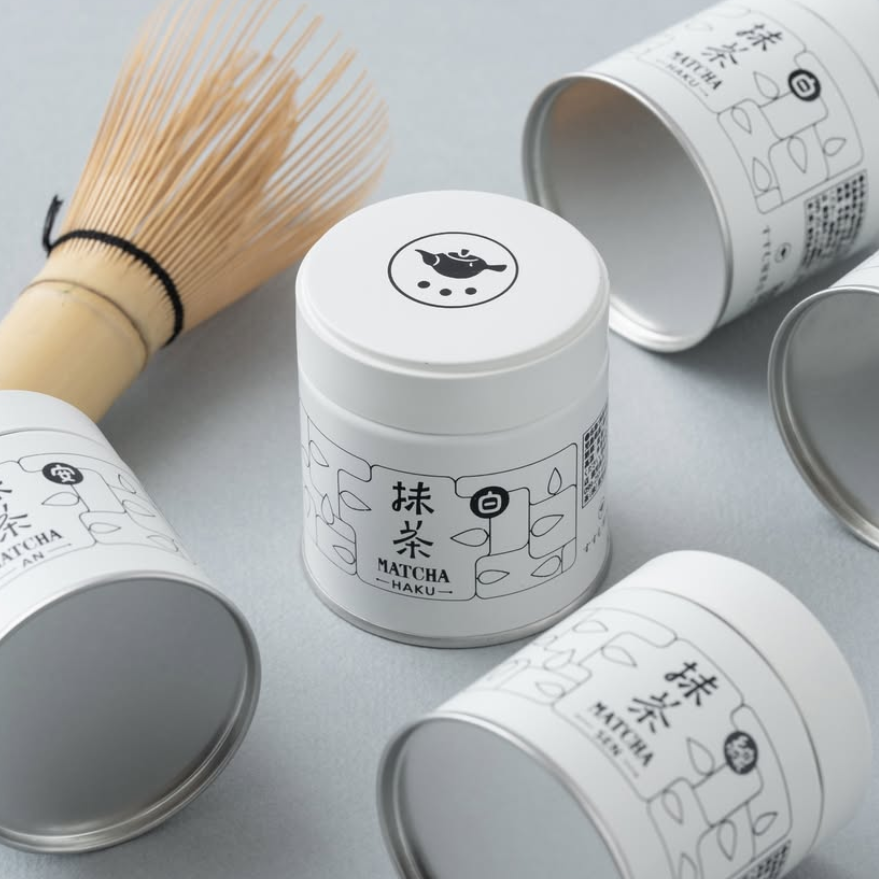
MORE TEA & TEAWARE
Susumuya Chaten
VIEW THE COLLECTION →
If you’re new to Japanese tea, or would like to enjoy it even more, please also take a look at the guide below.

FOR THE PERFECT CUP
How to Brew Japanese Tea for the Best Flavor
READ THE GUIDE →
Specifications
Brand: Susumuya Chaten
Materials: Porcelain (Arita ware), brass
Capacity (filled to the brim):
Small (1–2 people) — approx. 16.9 fl oz (500 ml)
Large (3–4 people) — approx. 30.4 fl oz (900 ml)
Dimensions (W incl. spout × H incl. handle):
Small — W 6.3 in (160 mm) × H 6.3 in (160 mm)
Large — W 7.5 in (190 mm) × H 7.9 in (200 mm)
Packaging: Presented in a dedicated gift box
Shipping
Ships within 10 business days · Shipping cost included in price
Care
The brass handle darkens and develops a patina over time. This is a natural characteristic of the material, not a defect.
Hand washing is recommended. Dry the brass handle thoroughly after washing.
Porcelain can chip or crack if knocked or dropped. Handle with care.
Not suitable for microwave use (metal handle).
Note
If this item is out of stock when you order, please allow approximately one month for it to ship.
-
Susumuya Chaten Susumu Dobin Teapot, Small (1–2 people): approx. 16.9 fl oz (500 ml)
H 6.3 in (160 mm) incl. handle, W 6.3 in (160 mm) incl. spout -
Susumuya Chaten Susumu Dobin Teapot, Large (3–4 people): approx. 30.4 fl oz (900 ml)
H 7.9 in (200 mm) incl. handle, W 7.5 in (190 mm) incl. spout -
Susumuya Chaten Susumu Dobin Teapot
Small (1–2 people): approx. 16.9 fl oz (500 ml), Large (3–4 people): approx. 30.4 fl oz (900 ml) -
Susumuya Chaten Susumu Dobin Teapot
Lift it from the side and pour without straining your wrist — the lid stays in place -
Susumuya Chaten Susumu Dobin Teapot
The handle folds down for compact storage -
Susumuya Chaten Susumu Dobin Teapot
Small (1–2 people): approx. 16.9 fl oz (500 ml), Large (3–4 people): approx. 30.4 fl oz (900 ml) -
Susumuya Chaten Susumu Dobin Teapot
A modern design pairing white Arita porcelain with a brass handle -
Susumuya Chaten Susumu Dobin Teapot
The brass handle develops a deeper patina over time -
Susumuya Chaten Susumu Dobin Teapot
Small (1–2 people): approx. 16.9 fl oz (500 ml), Large (3–4 people): approx. 30.4 fl oz (900 ml) -
Delivered in its own dedicated box
-
Delivered in its own dedicated box