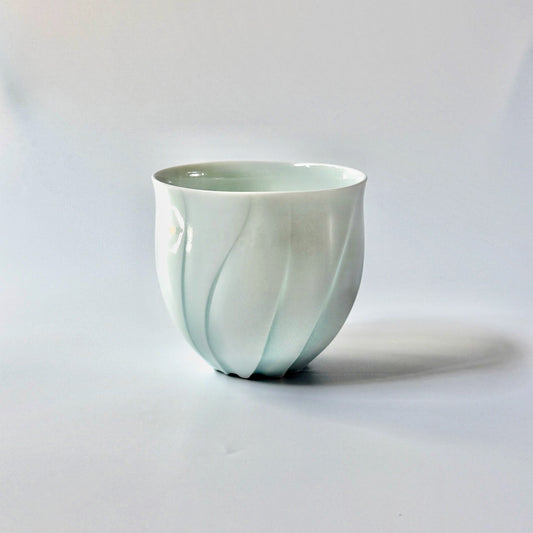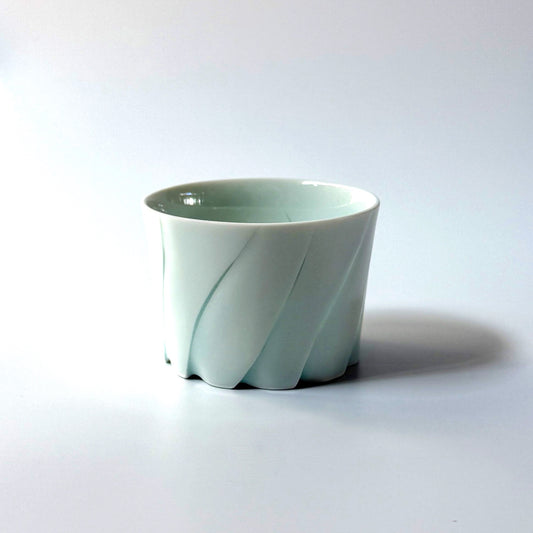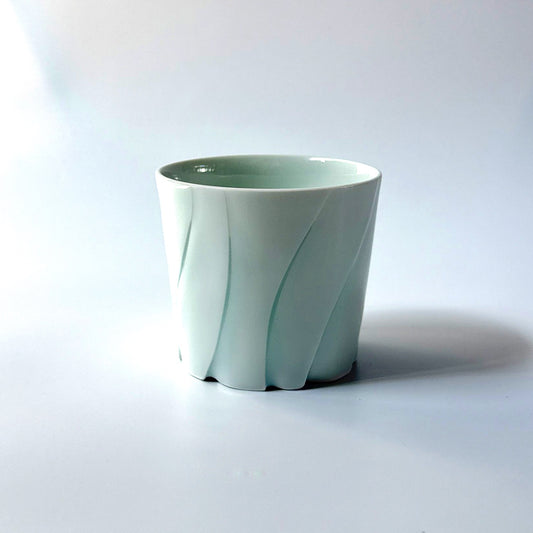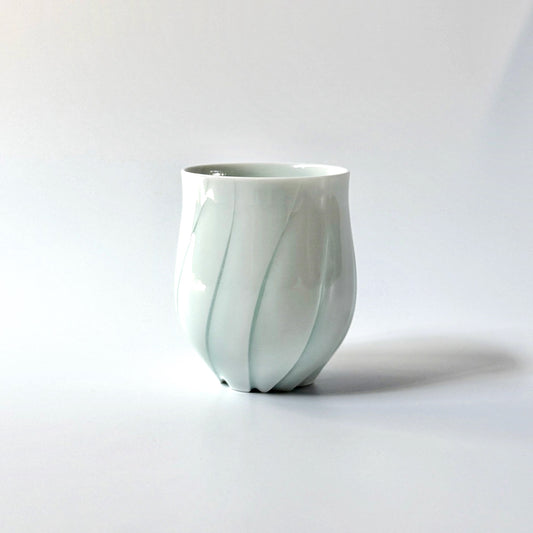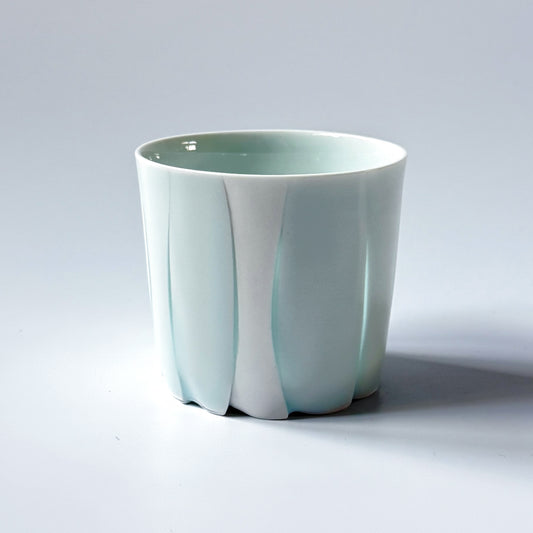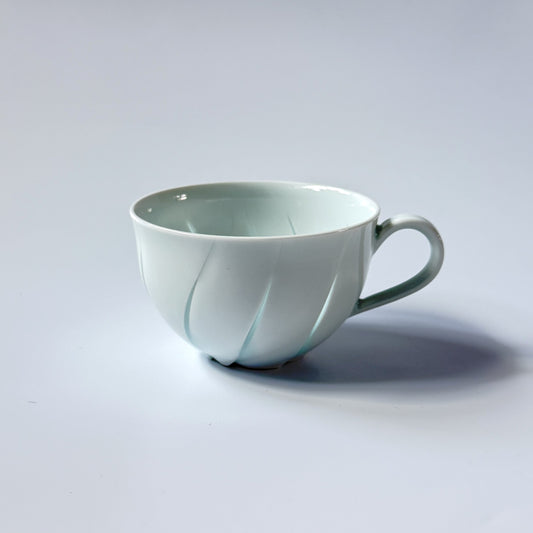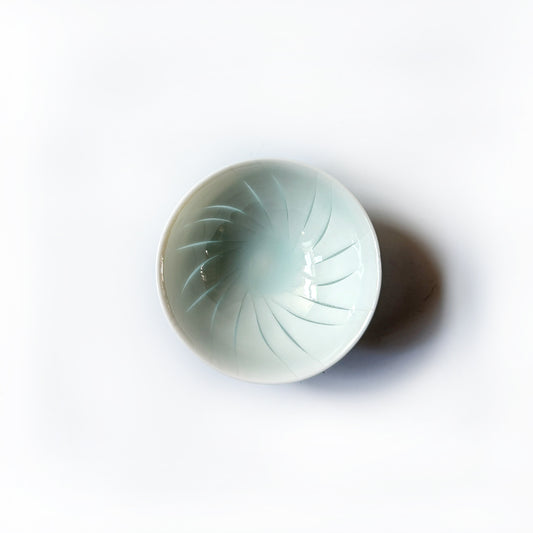
Collection: Hiroshi Taruta
Hiroshi Taruta
Reticulated porcelain (Hotarute) · Seto, Aichi
Hotarute is a porcelain technique with roots in Ming Dynasty China. The potter throws a vessel, then carves openings into the unfired body — removing material until the wall is pierced through. Transparent glaze fills the openings; when fired, it pools and sets, transmitting light where the clay has been removed. In the dark, the effect resembles fireflies suspended in the wall. Most practitioners use round perforations. Taruta uses lines — larger openings, greater structural risk, and a narrower margin for error at every stage. He chose this not despite the difficulty, but because of the quality of light it produces.
Taruta grew up in Nagoya and trained at Seto Pottery High School before apprenticing under ceramic artist Masanori Hatano in 2007. A remark from his teacher — that there is something to be said for taking one thing as far as it will go — took years to land. It did so during ten months traveling through Europe in 2015, where his work was received not as having a European quality, as people in Japan sometimes described it, but as distinctly Japanese. He returned knowing that hotarute, pursued completely, could become something no one else had made. His piece Yuragi received the Excellence Award at the 1st Japanese Culture Grand Prix in 2021. He works from his studio in Seto, Aichi Prefecture.

-
Seto Porcelain Tea Cup
Vendor:Hiroshi TarutaRegular price ¥20,000 JPYRegular priceUnit price per -
Seto Porcelain Rocks Cup (Small)
Vendor:Hiroshi TarutaRegular price ¥18,000 JPYRegular priceUnit price per -
Seto Porcelain Rocks Cup
Vendor:Hiroshi TarutaRegular price ¥20,000 JPYRegular priceUnit price per -
Seto Slim Porcelain Tea Cup
Vendor:Hiroshi TarutaRegular price ¥19,000 JPYRegular priceUnit price per -
Seto Porcelain Hotaru-te Tumbler
Vendor:Hiroshi TarutaRegular price ¥23,000 JPYRegular priceUnit price per -
Seto Porcelain Cup & Saucer
Vendor:Hiroshi TarutaRegular price ¥26,000 JPYRegular priceUnit price per -
Seto Porcelain Sake Cup
Vendor:Hiroshi TarutaRegular price ¥30,000 JPYRegular priceUnit price per