Ritofu — Hand-Painted Kyo-Yuzen Kimono and Accessories from Kyoto
Hand-Painted Kyo-Yuzen — Worn by the Imperial Family
Sairin Co., Ltd. is a Kyoto dyeing house that has practiced hand-painted Kyo-yuzen for generations. The company's work has been worn by members of the Japanese Imperial Family — a distinction earned through a technique that, even within the narrow world of Kyoto kimono, is considered rare.
In 2020, Tomoko Fujii took over as president from her father Hiroshi Fujii, himself regarded as one of the master dyers of his generation. She grew up inside this world. What she inherited was not only a business but a set of questions about how to keep something alive.

Tomoko Fujii
The Technique
Hand-painted yuzen — and what makes it rare
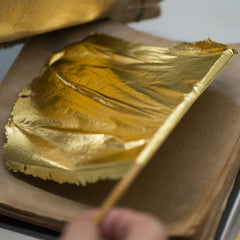
Kyo-yuzen is a Kyoto dyeing tradition characterized by multi-color gradations, fine detail, and — in its most accomplished form — embroidery and gold leafing applied over the dyed ground. Of all Kyo-yuzen produced today, hand-painted work accounts for only around ten percent. The rest is screen-printed or stenciled.
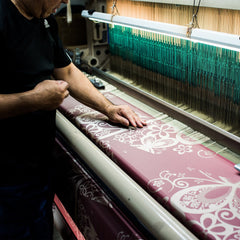
In hand-painted yuzen, the design originates in the dyer's mind and is executed entirely by hand — from the first draft through every stage of color application. Sairin uses a wide brush rather than the narrow brush standard in the field. The wider blade requires greater control, but it allows color to penetrate deeper into the silk fiber, producing a depth that cannot be achieved by surface application.

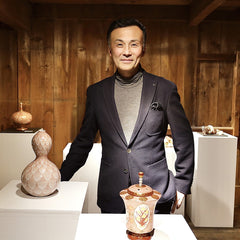
Kimono by Hiroshi Fujii
"There are about fifteen processes in making a Kyo-yuzen kimono — drafting, resist application, dyeing, finishing — each with its own specialist. We have long-standing direct relationships with these craftspeople. The gradations and multi-color brush work that require the highest skill are techniques that cannot be replicated elsewhere."
— Tomoko Fujii

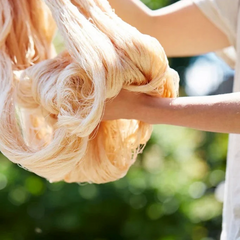
Wide-brush application — color dyed through to the core of the silk
Ritofu — Kyo-Yuzen for Daily Life
Ritofu is Sairin's original brand — created to bring hand-painted Kyo-yuzen out of the formal kimono context and into everyday use. The line includes full kimono as well as clutch bags, pouches, and accessories made from the same dyed silk.
Fujii's reasoning is straightforward: the techniques and aesthetic sensibility that went into formal kimono are not less valuable when applied to something smaller. And for people outside Japan — or those who have never worn kimono — the smaller objects offer a way in.
"I want to preserve the techniques and the aesthetic sense that has been part of Japanese life for centuries — but that doesn't mean old-fashioned is the only path. Keeping up with what is genuinely enjoyable and relevant for women today matters. I took on new challenges in order to preserve what is good."
— Tomoko Fujii
To Stay the Same, Keep Changing
"New technologies appear and disappear quickly. Traditional culture moves differently — it has a worldview, an aesthetic, a set of stories built up over a long period of time. That is what people from outside Japan are drawn to. To stay the same, we continue to change."
— Tomoko Fujii
Sairin Co., Ltd. was founded in Kyoto, where it has practiced hand-painted Kyo-yuzen dyeing across multiple generations. The company's work has been worn by members of the Japanese Imperial Family. Ritofu, Sairin's original brand, applies the same dyeing techniques to kimono and everyday objects for domestic and international customers. Tomoko Fujii became president in 2020.

Find products here
Ritofu
View Collection →